
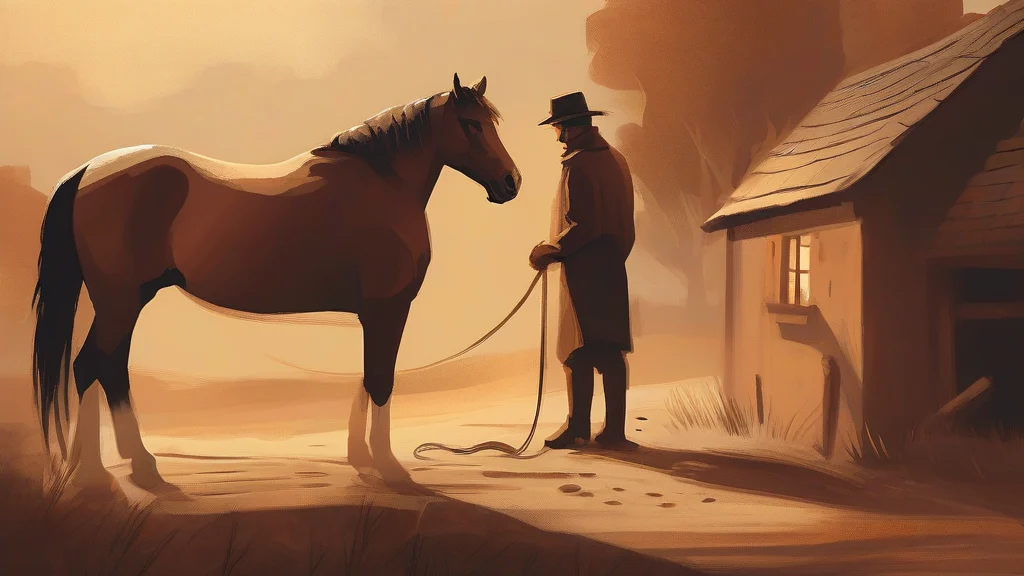
What does ostler mean?
An ostler is a stable worker whose traditional responsibility was looking after horses, including feeding, grooming, and tending them. In earlier periods, especially in Britain, an inn or large house might employ an ostler to care for guests’ horses. The word has a strongly historical and literary flavor today, so using it can evoke coaching inns, old stables, and the working routines of a pre-automobile household. Although it can sometimes refer more broadly to a groom or stable hand, its distinctive historical use is as a person responsible for horses at an inn. In ordinary modern conversation, “stable hand” or “groom” is usually the clearer choice.
nounAn ostler is a person who works in a stable, especially one who cares for horses or acts as a groom. The word is now chiefly historical or literary.
- A person employed to care for horses in a stable or inn stable, especially by feeding, grooming, or tending them.
"The ostler led the horses from the courtyard before the guests arrived."
"The ostler took care of the guest's horse while the traveller was inside the inn."
"She learned to ride after helping the old ostler around the yard."
The plural is formed by adding -s to the singular form.
"Several ostlers worked in the large royal stable."
Once a familiar stable worker, the ostler survives mainly in older books and period stories.
Reviewed by Deb Chak, Editor. AI-assisted content curated by RJS Tech Solutions LLP.
Where does ostler come from?
The word comes through Old French ostelier, meaning a stableman or an employee who cared for horses. That form developed from Latin hospitaller, originally associated with an inn or host and ultimately related to hospes, “host” or “guest.” The modern English form is chiefly recorded from the Middle English period and reflects the long-established trade of caring for horses at inns and elsewhere.
How ostler is actually used
Ostler is now uncommon in everyday speech. It is most often encountered in historical, literary, or antiquarian contexts; in modern English, groom or stable hand is usually more natural.
Easily confused with ostler
Hostler is a variant spelling of ostler, while ostler is the more established modern spelling in dictionaries.