
What does outbuilding mean?
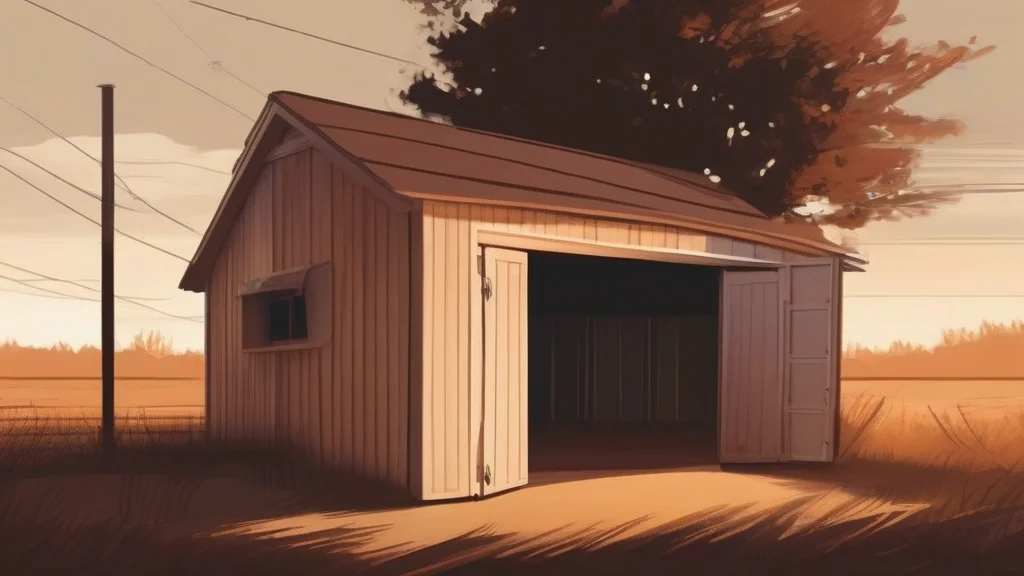
An outbuilding is a separate building that supports or accompanies a main building. It may be a garage, workshop, shed, storage space, animal shelter, or another practical structure. The word emphasizes the subordinate relationship between the two buildings: the outbuilding is physically detached or distinct but associated with a larger property or principal structure. It is useful when precision matters, since “outbuilding” covers many kinds of auxiliary structure without requiring a more specific term. The expression is common in British and American English, especially in descriptions of homes, farms, estates, and institutional premises. Although an outbuilding can be attractive, historic, or well used, the word itself does not imply that it is old, neglected, or unsuitable for occupation; those judgments come from the surrounding context.
nounA building separate from and usually subordinate to a main building, such as a shed, garage, or other auxiliary structure.
- A building separate from and subordinate to a main building; an annex or auxiliary structure.
"The old workshop is an outbuilding at the rear of the property."
"The farm workers use the stone outbuilding as a workshop."
"A small timber outbuilding at the side of the house provides space for tools and garden equipment."
The plural is formed by adding -s to the whole word.
"Several outbuildings stand behind the main house."
The word literally describes what sits “out” beside the main building: everything from garden sheds to workshops and garages.
Reviewed by Deb Chak, Editor. AI-assisted content curated by RJS Tech Solutions LLP.
Where does outbuilding come from?
The word is formed from the established English prefix out- and the noun building. Building itself comes from Old English byldan, meaning “to construct,” a development of the Germanic root shared by cognates such as German bauen and Dutch bouwen. The compound outbuilding developed in the early modern period as a practical label for a building outside or apart from a principal structure. The related verb outbuild, meaning “to build so as to exceed” or “to outlast,” shares the same elements but belongs to a different sense.
Related word forms
How outbuilding is actually used
Generally formal but widely understood. It is most common in British and US English for separate structures associated with a house, farm, institution, or estate. The term does not imply abandonment or poor condition.
Easily confused with outbuilding
A building is any substantial structure, while an outbuilding is specifically a separate structure ancillary to a main building.
An outhouse is a specific type of small outbuilding, typically an outdoor toilet, whereas outbuilding is a general term for any auxiliary building.