
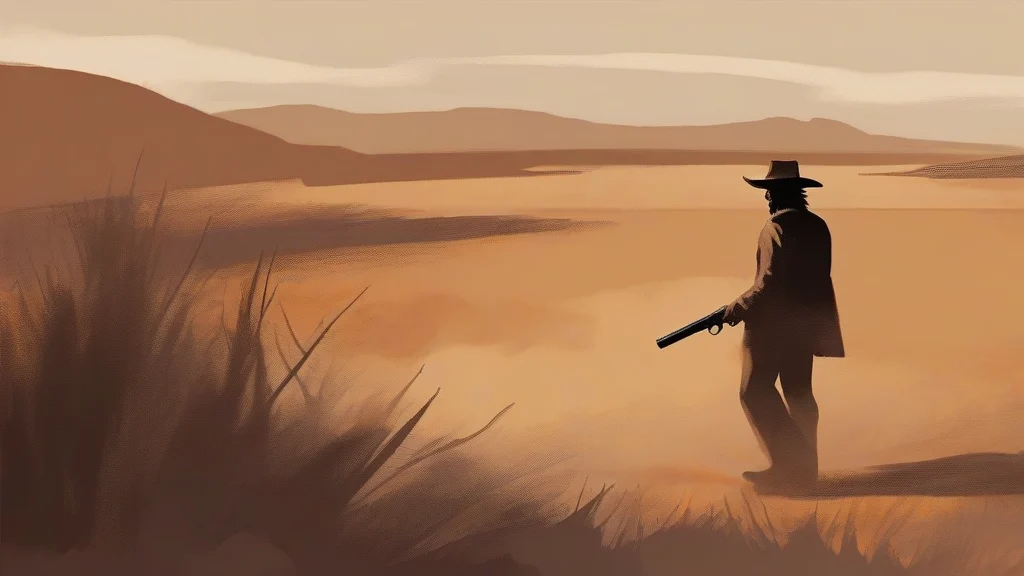
What does outlaw mean?
An outlaw is, in modern usage, someone who has broken the law and lives beyond lawful authority; the term can also denote a fugitive, brigand, or member of an outlaw motorcycle group. Historically, an outlaw was formally stripped of legal protection, allowing authorities to pursue them and seize their property. As a verb, to outlaw something means to prohibit it, while to outlaw a person means to declare that person outside the law. The word often suggests open rebellion or a life outside conventional society, and popular culture may romanticize outlaws, pirates, rebels, or motorcycle clubs. It is more legally specific than “outcast,” which indicates social exclusion rather than criminal status. Because “outlaw” can refer both to a person and to an act of prohibition, context determines whether it functions as a noun or a verb. Its long history and strong associations with frontier life, fugitives, and organized outlaw groups make it especially vivid in modern English.
A person who has broken the law and lives beyond lawful authority; historically, a person formally excluded from the protection of the law.
"Local legends still speak of an outlaw who hid in the forest above the valley."
Modern usage sometimes extends the word to members of outlaw motorcycle clubs and, less formally, to colorful rebels or pirates.
To declare a person outside the protection of the law or to make something prohibited or illegal.
"The council voted to outlaw overnight parking on the narrow residential streets."
This use is especially common in legal, governmental, and journalistic writing; the past participle “outlawed” is frequently used as an adjective.
The plural is used when referring to more than one person who has broken or been excluded from the law.
"The frontier settlement was haunted by tales of outlaws who robbed stagecoaches."
Its Old Norse ancestor literally meant “one outside the law”: a label for someone whom the law no longer protected.
Reviewed by Deb Chak, Editor. AI-assisted content curated by RJS Tech Solutions LLP.
Where does outlaw come from?
The English word descends from Old English ūtlaw, which was borrowed from Old Norse útlagr, literally “one outside the law,” formed from út “out” and lagr “law.” In English, the noun acquired a broader sense for fugitives and violent criminals while retaining its historical legal meaning. The verb originally followed the noun in declaring someone outside the law and later came to mean prohibiting something outright.
Related word forms
How outlaw is actually used
The noun is serious and legal in its historical sense, though modern entertainment and popular culture sometimes use it more romantically for rebellious figures or motorcycle clubs. The verb is common in legal, governmental, and journalistic contexts; “outlawed” is its usual inflected form.
Easily confused with outlaw
An outlaw has broken or been excluded from the law, whereas an outcast is primarily someone rejected or marginalized by a group.