What does overgraze mean?
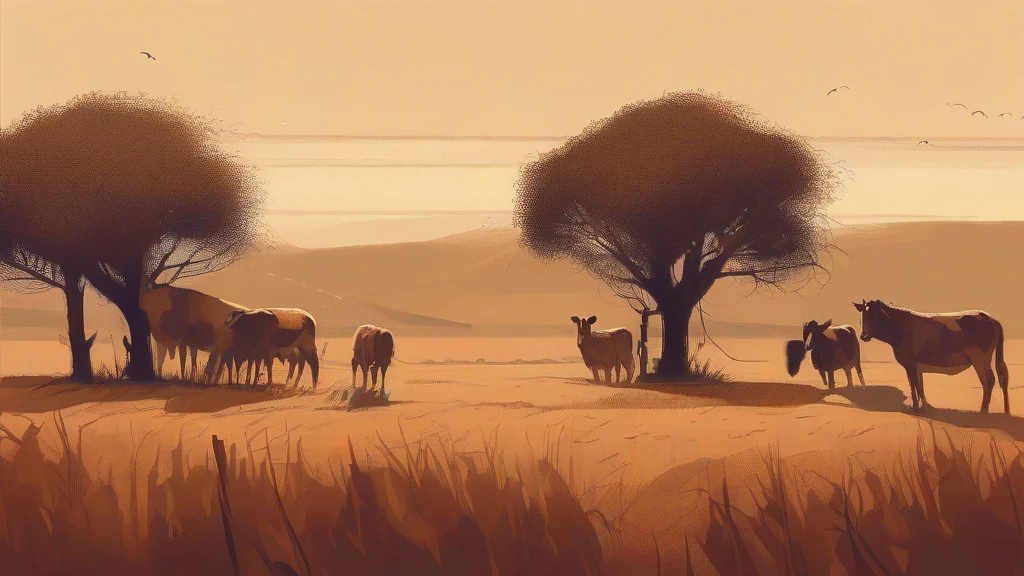
Overgraze refers to the act of allowing animals to graze excessively on a particular area of land, leading to its degradation and often resulting in soil erosion, loss of vegetation, and decreased fertility. This can have severe environmental and economic consequences, particularly in agricultural and pastoral communities. The term is often used to describe the negative impact of overgrazing on land and the need for sustainable grazing practices. Understanding the concept of overgraze is essential for promoting environmentally friendly land management and conservation.
verbTo graze (land or animals) excessively, leading to depletion of vegetation and often soil erosion.
- To graze excessively
- To allow animals to graze excessively on
"The cattle were left to overgraze the pasture, resulting in severe degradation of the land."
"The rancher's decision to overgraze the land led to its degradation."
"The government implemented regulations to prevent farmers from overgrazing their livestock."
Reviewed by Deb Chak, Editor. AI-assisted content curated by RJS Tech Solutions LLP.
Etymology of overgraze
The term overgraze originated from the combination of the prefix 'over-' meaning excessive or too much, and the verb 'graze' which refers to the act of eating grass or other plants. The word has been in use since the late 19th century to describe the practice of allowing animals to eat too much of the available vegetation, leading to land degradation.
How overgraze is actually used
Often used in environmental and agricultural contexts to describe the negative impact of excessive grazing on land.