
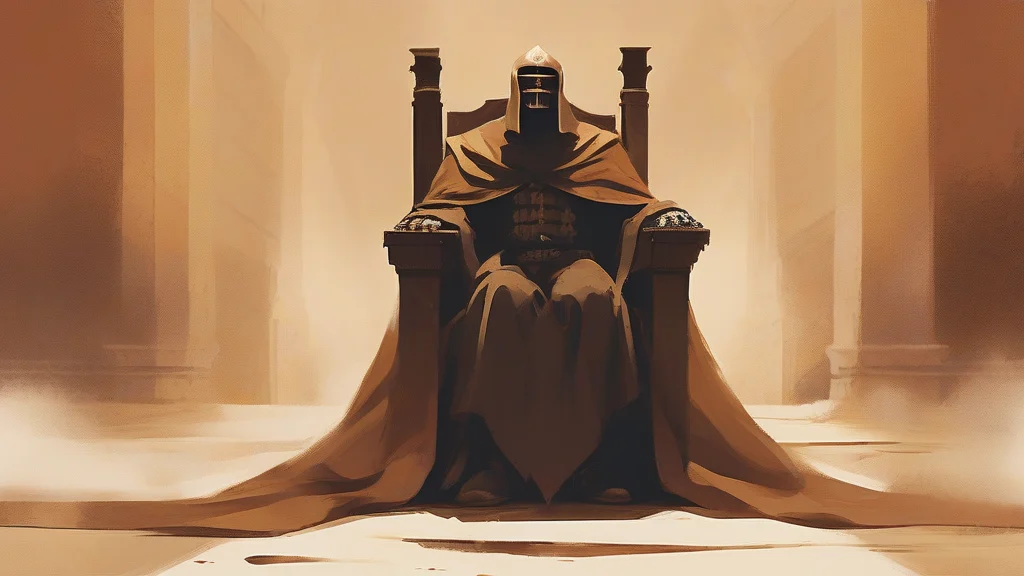
What does overlord mean?
An overlord is a ruler whose authority is recognized by those below them, especially a feudal superior lord entitled to loyalty or service from vassals. In modern figurative use, the word often suggests overwhelming, arbitrary, or oppressive control, and it frequently appears in stories, games, and descriptions of tyrannical authority. Although its literal history concerns safeguarding bread, the word came to mean a chief guardian and ultimately a supreme lord. As a verb, “overlord” means to exercise superior authority over another person, place, or institution, though this use is much less common than the noun. The term is more evocative and historically colored than the neutral words “ruler” or “sovereign,” and its modern uses often imply a particularly intimidating or domineering kind of power.
A feudal superior lord, sovereign ruler, or other authority commanding the allegiance or obedience of lesser figures.
"The village had been under the overlord's protection for generations."
Historically specific to feudal relations; modern usage is often figurative and carries connotations of harsh or absolute power.
To act as a superior ruler over someone or something, especially by dominating or controlling them.
"The neighboring lords feared that the duke would overlord the entire province."
Transitive and relatively uncommon, with a formal or literary tone.
Used for multiple feudal superior lords, sovereign rulers, or figures exercising supreme authority.
"The rival overlords met at the border to negotiate their terms of peace."
An overlord literally began as a bread-warden: the person responsible for guarding loaves, before the word evolved into a symbol of supreme authority.
Reviewed by Deb Chak, Editor. AI-assisted content curated by RJS Tech Solutions LLP.
Where does overlord come from?
The word comes from Old English hlāfweard, formed from hlāf, meaning “loaf” or “bread,” and weard, meaning “guard” or “guardian.” Its earliest sense was a person entrusted with protecting bread, which developed metaphorically into an overseer or protector and then into a chief or supreme lord. Modern cognates include English “loaf,” “ward,” and “warden,” all of which continue forms of the same Germanic elements.
Related word forms
How overlord is actually used
The noun is especially associated with feudal hierarchy, though it is also used figuratively for intimidating or domineering authority. Modern applications often carry a negative, even literary or fantastical, implication. The verb is comparatively uncommon and formal.
Easily confused with overlord
An overlord is a superior ruler, whereas an overload is an excessive amount or a demand beyond capacity.