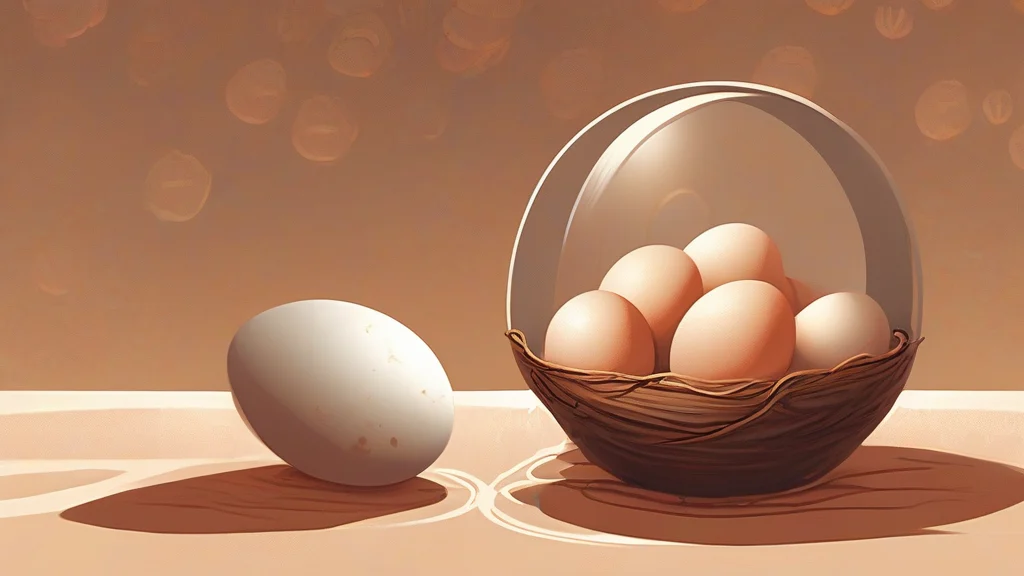
What does ovoviviparity mean?
Ovoviviparity is a reproductive strategy in which the embryos develop inside eggs that hatch inside the mother's body. This process is distinct from oviparity, where the eggs hatch outside the mother's body. In ovoviviparity, the young are nourished by a yolk sac before being born alive. This strategy is found in some species of sharks, rays, and lizards. The term ovoviviparity is derived from the Latin words 'ovum', meaning egg, and 'vivus', meaning alive. It is an important aspect of the biology and ecology of these species, and has implications for their evolution and conservation.
nounThe quality or state of giving birth to live young, in which the embryos develop inside eggs that hatch inside the mother's body.
- 1. The quality or state of giving birth to live young, in which the embryos develop inside eggs that hatch inside the mother's body.
"Some species of sharks exhibit ovoviviparity, where the young are nourished by a yolk sac before being born alive."
"Some species of sharks exhibit ovoviviparity, where the young are nourished by a yolk sac before being born alive."
Reviewed by Deb Chak, Editor. AI-assisted content curated by RJS Tech Solutions LLP.
Etymology of ovoviviparity
The term ovoviviparity is derived from the Latin words 'ovum', meaning egg, and 'vivus', meaning alive. It is a combination of the words 'ovum' and 'vivipara', which means 'giving birth to live young'.
How ovoviviparity is actually used
Ovoviviparity is a technical term used in biology and ecology to describe a specific reproductive strategy. It is not commonly used in everyday language, but is an important concept in the study of animal reproduction and development.