
What does owl mean?
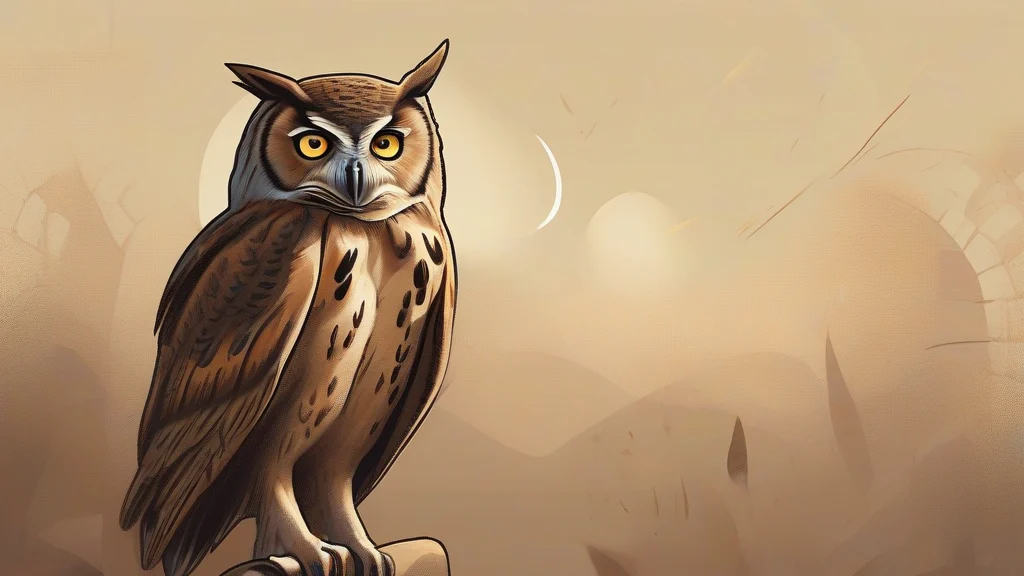
An owl is a nocturnal bird of prey, recognized by its large forward-facing eyes, rounded head, and often haunting call. The word also has established figurative meanings: an owl may be a person regarded as wise, especially in sayings such as "wise as an owl," or someone who habitually stays awake late, known as a night owl. These associations combine the bird’s large-eyed, watchful appearance with the traditional reputation of owls as symbols of wisdom. In ordinary conversation, "owl" usually refers simply to the bird, while the figurative uses are more common in familiar, literary, or proverbial contexts. The word is used in British and American English, although the precise species associated with a region may differ. The related word "owlet" means a young owl and is also used for small owl-like birds in some species names.
nounA nocturnal bird of prey with large forward-facing eyes, a rounded head, and often a distinctive call. By extension, an owl can refer to a person noted for wisdom or a nocturnal, studious person.
- A nocturnal bird of prey with large eyes and a hooked bill.
- A person regarded as wise, especially because of an appearance or reputation for careful judgment.
- A person who habitually stays awake late at night.
"An owl called softly from the oak tree as the moon rose over the garden."
"The owl watched the mouse from the branch above."
"Her aunt was the family owl, offering calm advice when everyone else was worried."
The standard plural of "owl" is "owls."
"Several owls called from the forest."
Owls can turn their heads up to 270 degrees, giving them an extraordinary field of view while hunting in the dark.
Reviewed by Deb Chak, Editor. AI-assisted content curated by RJS Tech Solutions LLP.
Where does owl come from?
The English word comes from Old English "ule," an Old Germanic form generally reconstructed as Proto-Germanic *ūlą. Its ultimate origin is uncertain, and some scholars have connected it with imitations of the bird’s call. The word has no widely recognized English cognates outside its own inflectional and derivative forms, although related forms occur in other Germanic languages. The familiar figurative sense of a wise person developed from the owl’s traditional symbolic association with wisdom.
Related word forms
How owl is actually used
The figurative senses are usually favorable or mildly playful. The sense for a person who stays up late is common mainly in informal usage, as in "night owl."
Easily confused with owl
An owl is a bird, while a howl is a loud cry or howl made by a person, animal, or the wind.