
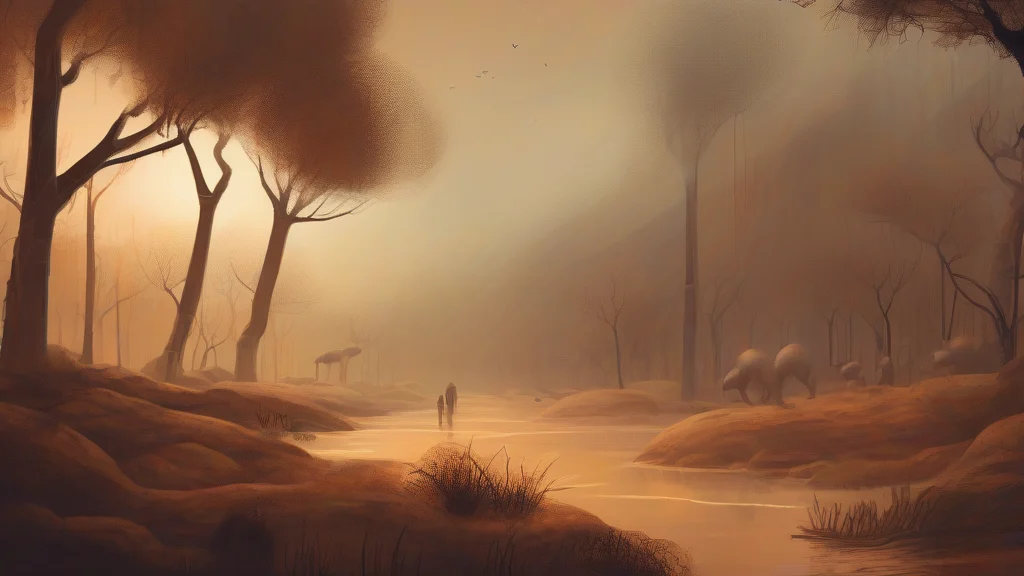
What does paleoecology mean?
Paleoecology is the study of ecological relationships in the past. It combines evidence from fossils, subfossils, pollen, sediments, and other preserved materials to reconstruct former climates, habitats, and communities of organisms. Unlike conventional ecology, which often concentrates on living systems, paleoecology examines how these systems were organized and how they changed over geological or historical time. It can reveal the effects of climate shifts, environmental changes, species movement, disturbance, and human activity on landscapes that no longer exist. The field is especially useful in archaeology, geology, climatology, evolutionary biology, and conservation science. Its findings can also inform present-day ecological models by showing how ecosystems responded to comparable changes in the past. The word is most common in scientific and academic contexts and is encountered in the British spelling "palaeoecology" as well as the standard American form.
nounThe branch of ecology that studies ancient environments and the relationships between organisms and their surroundings, especially by examining fossil, subfossil, and sedimentary evidence. It is used to reconstruct how climates, habitats, and ecological communities changed over time.
- The study of the relationships between organisms and their environments in past geological or ecological periods, especially through fossil and subfossil evidence.
"Fossil pollen and plant remains helped researchers use paleoecology to reconstruct the environment around the ancient settlement."
"The sediment cores provided important paleoecological evidence of a long-term shift from grassland to woodland."
"Comparative paleoecology can reveal how wetland communities responded to changes in climate and human settlement."
The plural is rare; the word is ordinarily used in the singular to name the discipline or a body of research.
"Paleoecologies of coastal wetlands offer clues to how sea levels and climates have changed."
Paleoecology turns dust, pollen, bones, and sediment into evidence of how entire living worlds were assembled and transformed.
Reviewed by Deb Chak, Editor. AI-assisted content curated by RJS Tech Solutions LLP.
Where does paleoecology come from?
Paleoecology combines the combining form "paleo-", from Greek palaios, meaning "old" or "ancient," with "ecology," which was coined from Greek oikos, meaning "house" or "dwelling," and -logia, denoting the study of a subject. The compound developed in the modern scientific tradition as researchers began reconstructing ancient environments from the ecological evidence preserved in the geological record.
Related word forms
How paleoecology is actually used
The term is technical and is normally used in research and academic writing. British and American scholarship also commonly uses the spelling "palaeoecology."
Easily confused with paleoecology
Paleontology studies ancient life through fossils, whereas paleoecology focuses specifically on the relationships between ancient organisms and their environments.