
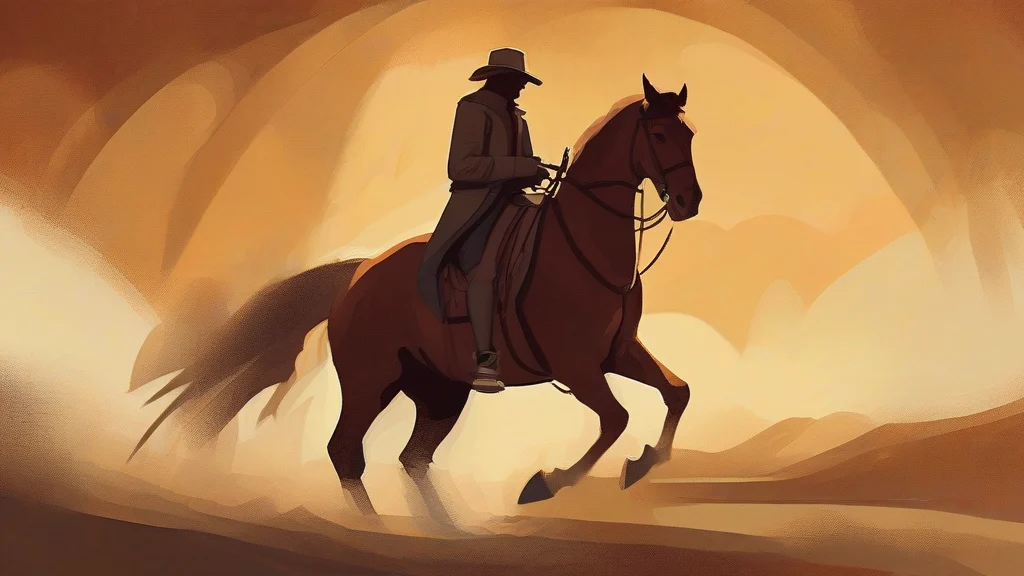
What does palfreyed mean?
Palfreyed is an uncommon, chiefly literary or historical adjective meaning mounted on a palfrey—a horse intended and equipped for riding, especially a fine or ceremonial riding horse. It normally describes a rider rather than the animal: a knight could be palfreyed, or a person might appear palfreyed on a richly caparisoned horse. The word therefore suggests both equestrian status and an older social world in which the quality of a rider’s horse mattered. It is not simply a general synonym for mounted or riding, since a palfrey was a particular type of saddle horse. In modern English, palfreyed is chiefly encountered in archaic, literary, historical, or antiquarian writing, so its unfamiliarity can give it a deliberately elevated or nostalgic tone. Its greatest interest is historical: it preserves specialized vocabulary from medieval and early modern horse culture while recalling the practical and social distinctions once made between horses for riding and those used for other work.
adjectiveMounted on or riding a palfrey. A palfrey was a horse used for riding, especially a fine or ceremonial riding horse.
- Mounted on or riding a palfrey.
"The queen entered the courtyard palfreyed upon a white horse."
"At the tournament, palfreyed riders gathered beside the lists."
"The chronicler described the ambassador as palfreyed on a richly adorned grey."
A palfrey was a rider’s distinguished mount: palfreyed means mounted on one, and the word now survives mainly in historical storytelling.
Reviewed by Deb Chak, Editor. AI-assisted content curated by RJS Tech Solutions LLP.
Where does palfreyed come from?
The adjective was formed in English by adding -ed to palfrey. Palfrey comes through Middle English from Old French palefrei and Medieval Latin palefridus, a word generally traced to Latin palea, meaning “straw,” and frenum, meaning “bridle,” referring to the horse’s harness. The Old French palefroi and Latin palefridus are older cognate forms, while palfreyed became especially associated with medieval and early modern descriptions of riders.
How palfreyed is actually used
Rare and chiefly literary, historical, or antiquarian. Its elevated, old-fashioned register often gives it a deliberately nostalgic tone.