
What does panettone mean?
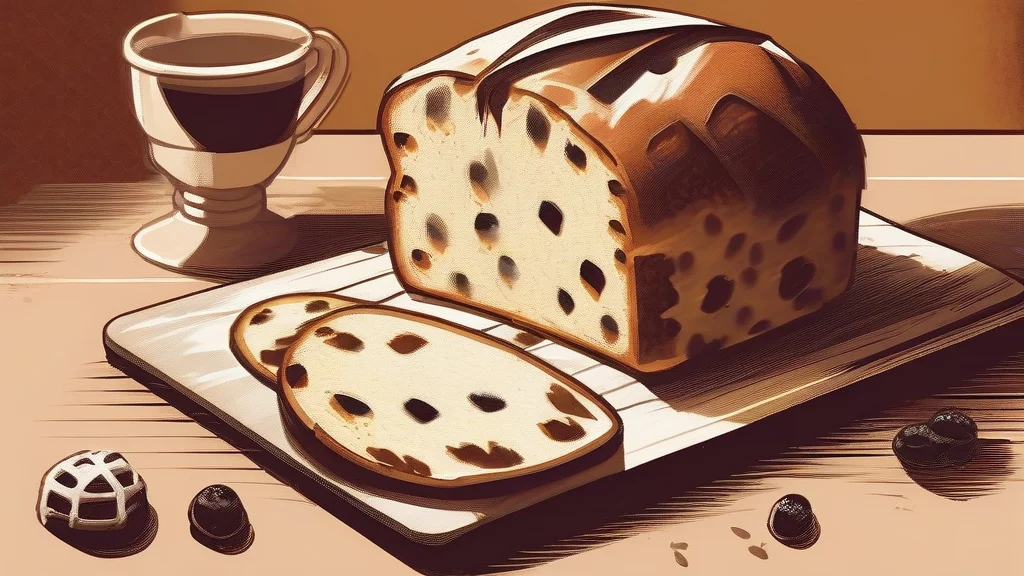
A panettone is a tall, dome-shaped Italian sweet bread made from an enriched yeast dough containing ingredients such as flour, sugar, eggs, butter, and dried or candied fruit. Its soft, tender texture and lightly sweet, fruit-filled character distinguish it from many other breads. Although now available throughout the year, it is particularly associated with Christmas in Italy and has also become part of seasonal food traditions in Britain, the United States, and elsewhere. Traditional versions come from Turin, while modern variations may include chocolate, lemon, coffee, or other fillings and coatings. The original dome shape is often interpreted as a symbol of prosperity and celebration. As a loanword, panettone is commonly written in italics in formal editorial contexts, and its Italian plural, panettoni, is widely used even in English. It is usually enjoyed in thin slices with coffee, although it can also be used in desserts or paired with cream, cheese, or sweet wine.
nounA tall, dome-shaped Italian sweet bread made with enriched dough, yeast, sugar, eggs, and butter, traditionally containing candied fruit and raisins. It is especially associated with Christmas and is often served with coffee or as a dessert.
- A tall, sweet Italian bread enriched with butter, eggs, and sugar, usually containing candied fruit and raisins and commonly eaten at Christmas.
"They served a traditional panettone with strong coffee after Christmas dinner."
"A café in Milan serves small panettone with espresso and mascarpone."
"The chef wrapped the panettone in decorative paper for the holiday hamper."
The Italian plural panettoni is standard and commonly used in English; panettones is also accepted in general writing.
"The bakery sells small panettoni filled with pistachio cream."
The panettone's towering dome was traditionally designed to symbolize wealth and abundance, turning Christmas breakfast into a magnificent edible architecture.
Reviewed by Deb Chak, Editor. AI-assisted content curated by RJS Tech Solutions LLP.
Where does panettone come from?
The word comes from Italian panettone, a name associated especially with Turin. It ultimately derives from pane, meaning “bread,” which continues Latin panis; the Italian form developed through a diminutive referring to a small loaf and an augmented form associated with a large loaf. The English borrowing appeared in the late 19th century, initially in references to Italian sweet bread.
Related word forms
How panettone is actually used
In English, the plural is usually panettoni, although panettones is also accepted. The word is common in both British and American English and is used beyond the Christmas season for festive desserts, gifts, and café treats.
Easily confused with panettone
A brioche is a rich French butter bread that is often shaped in a loaf or ring, whereas a panettone is a sweet, dome-shaped Italian yeast bread traditionally containing dried fruit.
Pandolce is a broader term for traditional Italian sweet breads, while a panettone specifically refers to the tall, enriched, fruit-containing bread associated with Turin and Christmas.