
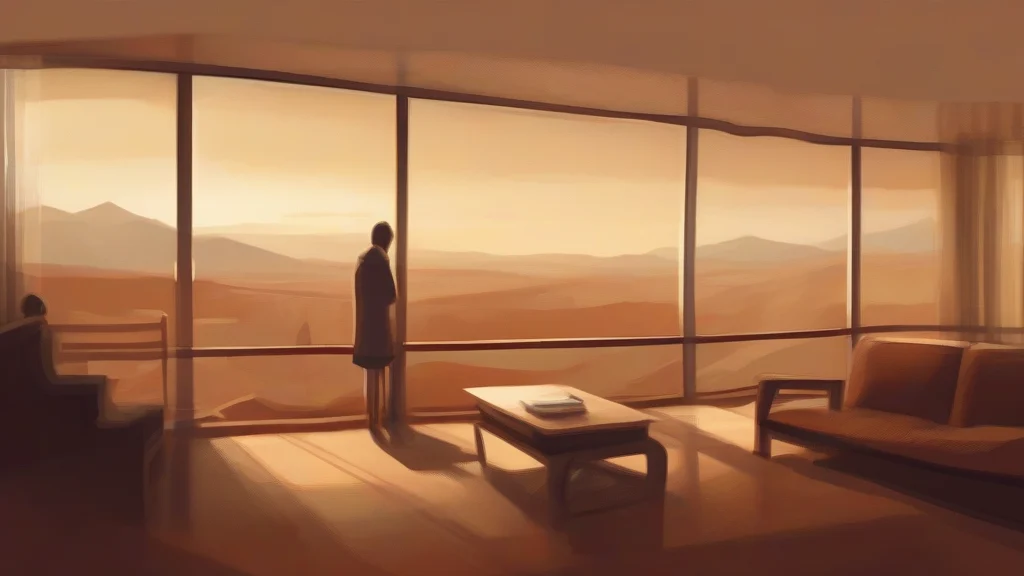
What does panorama mean?
A panorama is a wide, continuous view of a landscape, city, or other scene, usually one that can be seen from a raised or distant viewpoint. The word often conveys the impression of taking in a large area at once, making it more evocative than simply “view” and commonly associated with impressive or expansive scenery. In figurative use, a panorama is a broad survey of a subject, period, or field of knowledge. For example, a documentary may offer a panorama of contemporary life, while a history book may present a panorama of political and social change. Its origin in Greek combines elements meaning “all” and “view,” reflecting both its panoramic visual scope and its broad, comprehensive meaning.
nounA broad, uninterrupted view of an area or scene, especially one seen from a high or distant viewpoint. By extension, a panorama is a comprehensive survey of a subject, such as history, politics, or culture.
- A broad, uninterrupted view of an area or scene.
- A comprehensive survey or representation of a subject or field.
"From the summit, the hikers took in a sweeping panorama of the mountains and the valley below."
"The cable car offers a panorama of the harbor and the surrounding hills."
"The book presents a panorama of the political changes that shaped the region."
The regular plural is used for separate views or scenes, as in “panoramas of the countryside.”
"The exhibition presents panoramas of rural life from several regions."
Panorama comes from Greek roots meaning “all” and “view”: the word literally describes a view that takes in everything.
Reviewed by Deb Chak, Editor. AI-assisted content curated by RJS Tech Solutions LLP.
Where does panorama come from?
Panorama entered English in the late eighteenth century from Greek panōrama, literally “an all-seeing view.” The word is formed from pan-, meaning “all,” and horama, meaning “view,” ultimately related to horan, “to see.” Its development reflects the period's interest in wide painted or mechanical views of cities and landscapes.
Related word forms
How panorama is actually used
The word is commonly used for a wide scenic view and, figuratively, for a broad overview. In the figurative sense, “panorama of” is especially frequent, while “complete panorama” and “comprehensive panorama” can suggest thoroughness rather than a literal visual scene.