
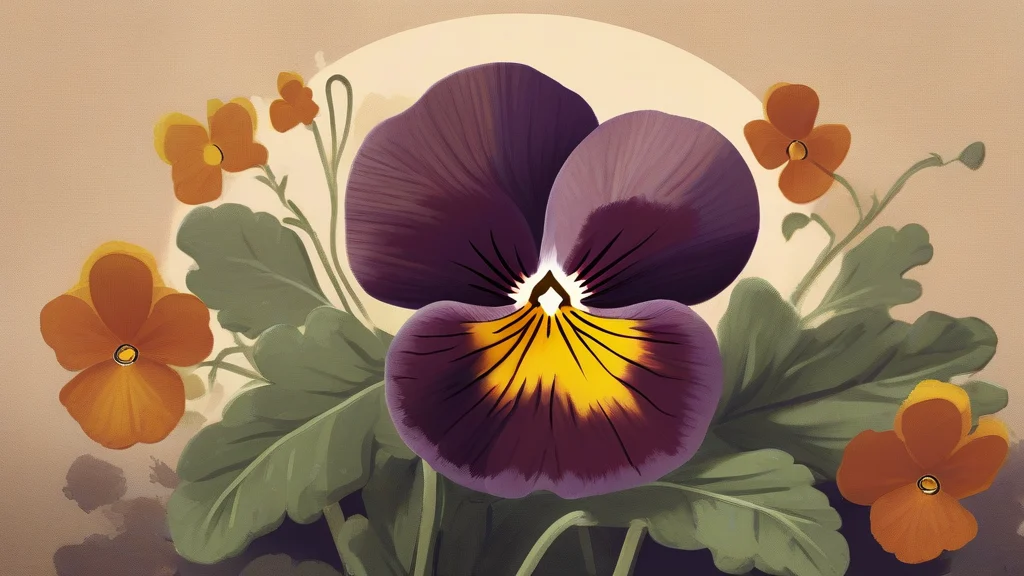
What does pansy mean?
A pansy is above all a small-flowered ornamental violet, especially the familiar garden varieties of Viola tricolor. Its dark, velvety leaves and brightly colored flowers have made it a popular bedding and container plant. The word also has an older, now offensive slang sense: a cowardly or insufficiently masculine man. In that use, “pansy” is derogatory and may carry an explicitly homophobic or misogynistic implication, so neutral wording is preferable. The flower’s name comes from the French pensée, meaning “thought,” traditionally linked to the blotched markings of its leaves as thoughts on a page. Across gardening, poetry, and informal English, “pansy” is therefore unusually vivid: botanically it names a familiar violet, while socially it can evoke cowardice or perceived effeminacy. The flower sense is now dominant, whereas the insulting sense is archaic or deliberately provocative.
nounAn ornamental violet, especially the small-flowered Viola tricolor and its garden hybrids, widely grown for its brightly colored flowers. The word can also denote, in offensive informal use, a man regarded as cowardly, weak, or insufficiently masculine.
- An ornamental violet with velvety leaves and brightly colored flowers, especially the varieties of Viola tricolor and their garden hybrids.
- An offensive, chiefly informal and gender-targeted term for a man considered weak, cowardly, or insufficiently masculine.
"A bed of pansies brightened the garden through the cool weeks of spring."
"She planted purple and yellow pansies in a window box."
"His teammates dismissed him as a pansy rather than risk another tackle."
The regular plural is formed by adding -ies. In the floral sense, it may refer to several individual flowers, plants, or varieties.
"Bright pansys lined the path leading to the front door."
The flower’s name comes from the French word for “thought,” traditionally because its blotched leaves were imagined to resemble thoughts written on a page.
Reviewed by Deb Chak, Editor. AI-assisted content curated by RJS Tech Solutions LLP.
Where does pansy come from?
The word entered English in the early 17th century through French pensée, meaning “thought,” an alteration of the French flower name. French pensée derives from Latin pensare, “to think,” ultimately associated with pendere, “to weigh,” while related forms include English pensive and compensate. The flower became called a “thought” because the markings on its leaves were traditionally said to resemble thoughts on a written page.
How pansy is actually used
The floral sense is ordinary and neutral. The figurative sense is derogatory, informal, and often strongly gender-targeted; it can be used as a homophobic or misogynistic insult and should therefore be avoided in neutral or formal contexts.