
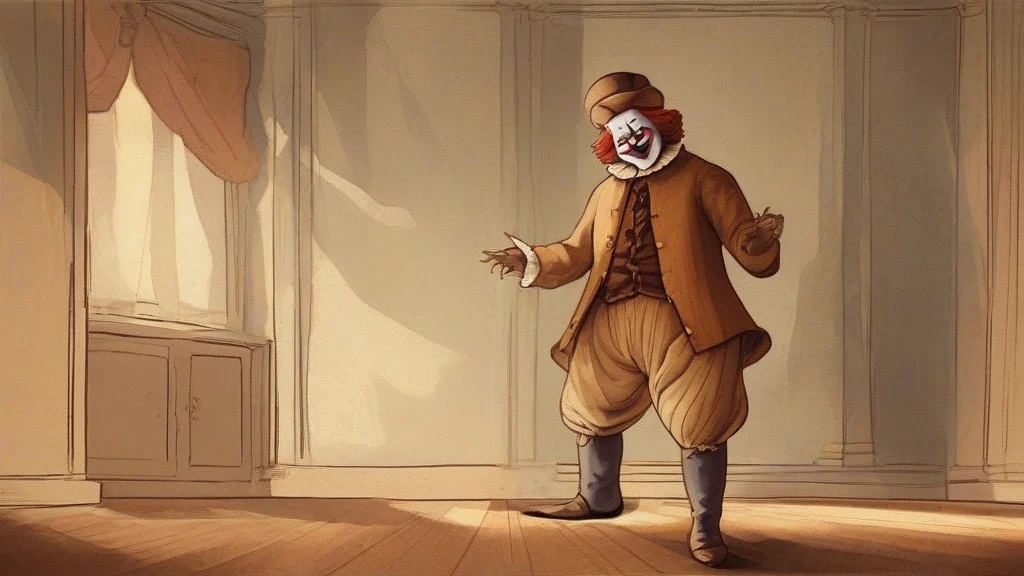
What does pantaloon mean?
Pantaloon has a specialized history that combines clothing, theatre, and slang. In its best-known theatrical sense, it names a traditional comic character in pantomime and commedia dell’arte, usually depicted as an elderly man who is pompous, miserly, absurdly dressed, or continually outwitted. The character helped establish several conventions of stage comedy, including energetic slapstick and the contrast between an dignified older figure and a nimble younger rival. Pantaloon can also refer, chiefly in older usage, to loose or baggy trousers or breeches; the plural pantaloons is sometimes encountered in this sense. In informal American and British slang, the word has also been used for a police officer, usually with a comic or disparaging implication. Outside those contexts, it is now primarily encountered in discussions of theatre history, where it refers to the stock figure rather than an ordinary person.
nounA pantaloon is a stock comic character in pantomime or commedia dell’arte, traditionally portrayed as an old man. The word can also mean loose or baggy trousers, and in informal slang it may refer to a police officer.
- A stock comic character in pantomime and commedia dell’arte, traditionally an old man, often pompous or greedy.
- Loose or baggy trousers or breeches, especially in historical usage.
- A police officer, in informal slang.
"The pantomime traditionally featured a bumbling pantaloon who pursued the harlequin through a series of slapstick mishaps."
"The theatre company revived a production in which the frustrated pantaloon was the central comic figure."
"The old actor appeared in exaggerated clothes that made him look like a stage pantaloon."
"In the comic dialogue, he accused the policeman of interfering with his business."
Usually plural in the historical clothing sense; the singular pantaloon is standard in the theatrical and police-officer senses.
"He preserved a portrait of his grandfather wearing wide, faded pantaloons."
The word names one of pantomime’s oldest comic figures: an elderly, often pompous character whose elaborate trousers became part of the costume.
Reviewed by Deb Chak, Editor. AI-assisted content curated by RJS Tech Solutions LLP.
Where does pantaloon come from?
The word entered English through French pantalon, which was associated with Italian pantalone, the name of a traditional character in commedia dell’arte. Italian pantalone developed through a variant of the name Pantaleone, traditionally associated with Greek words meaning “all” and “lion.” In English, the name became attached both to the comic theatrical character and to the conspicuous loose trousers traditionally worn by that character.
How pantaloon is actually used
Outside descriptions of traditional theatre, the word is uncommon. The clothing sense is largely historical, while the police-officer sense is informal and can sound dismissive or comic depending on context.
Easily confused with pantaloon
A pantaloon is a traditional stock character within pantomime, whereas a pantomime is the theatrical performance or dramatic form that may feature such a character.