
What does par mean?
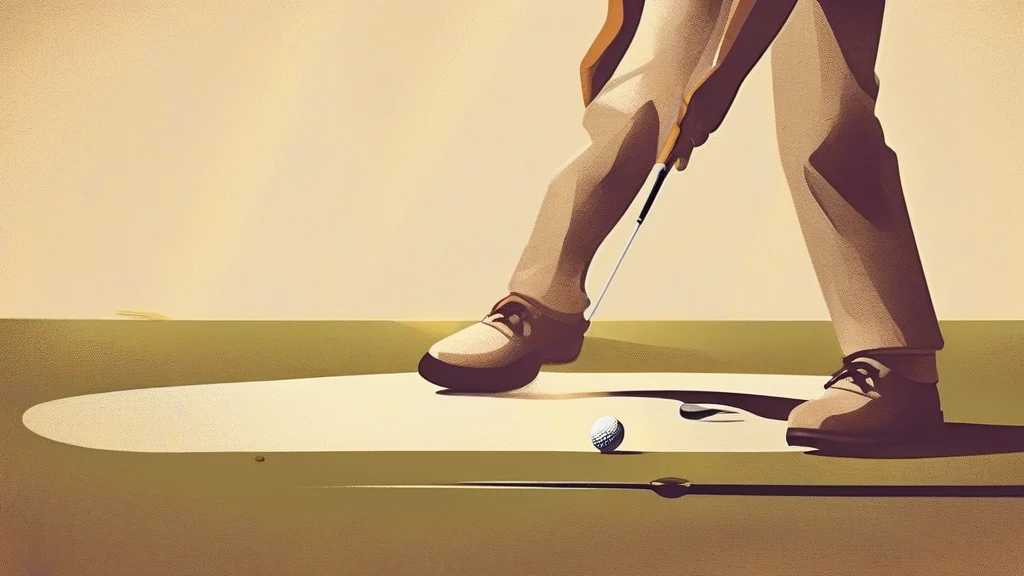
Par is most familiar from golf, where it denotes the number of strokes a skilled golfer would be expected to take to complete a hole or course. A golfer who completes a round in the expected number of strokes is said to be at even par; one under par has beaten the standard, while one over par has not. The word also means an equal level or standard, as in "on par with," and as a verb it means to match or equal something in quality, value, or performance. Outside golf, its use is often informal but widely understood, especially in business, education, and discussion of performance. Par comes ultimately from Latin par, meaning "equal," through Old French. The word is therefore useful beyond sports vocabulary: it names the idea of a benchmark and, in its verbal form, the act of matching one.
The number of strokes in golf that a skilled golfer is expected to take to complete a hole or course; also, an equal level or standard.
"The course was played in 72 strokes, two under par."
The golf sense can refer to an individual hole or to an entire round. The broader sense is common in expressions such as "on par" and "up to par."
To be equal to or match another person or thing in rank, quality, value, or performance.
"Few competitors can par the champion's consistency."
The verb is most often used in the expression "par with" and is somewhat more informal than formal alternatives such as "match" or "be comparable to."
The plural is used chiefly in golf, especially when referring to scores achieved on different holes or in separate rounds.
"She recorded two pars and one birdie in the final round."
In golf, par turns the entire course into a benchmark: on par means matching that standard, while under par means beating it.
Reviewed by Deb Chak, Editor. AI-assisted content curated by RJS Tech Solutions LLP.
Where does par come from?
The word entered Middle English from Old French par, which in turn came from Latin par, meaning "equal" or "on equal terms." Its golf sense developed from the idea of a score equal to the expected number of strokes. Latin par is also the source of related English words including peer and compare, as well as parity.
Related word forms
How par is actually used
In golf, par is usually a fixed numerical benchmark for a hole or course. Outside golf, it is often informal and can mean equal in quality, value, or status. The verb is chiefly used in the expression "to par with," while the noun is common in phrases such as "on par" and "below par."
Easily confused with par
Par means equality or a standard score, whereas a pair is a set of two people or things.