
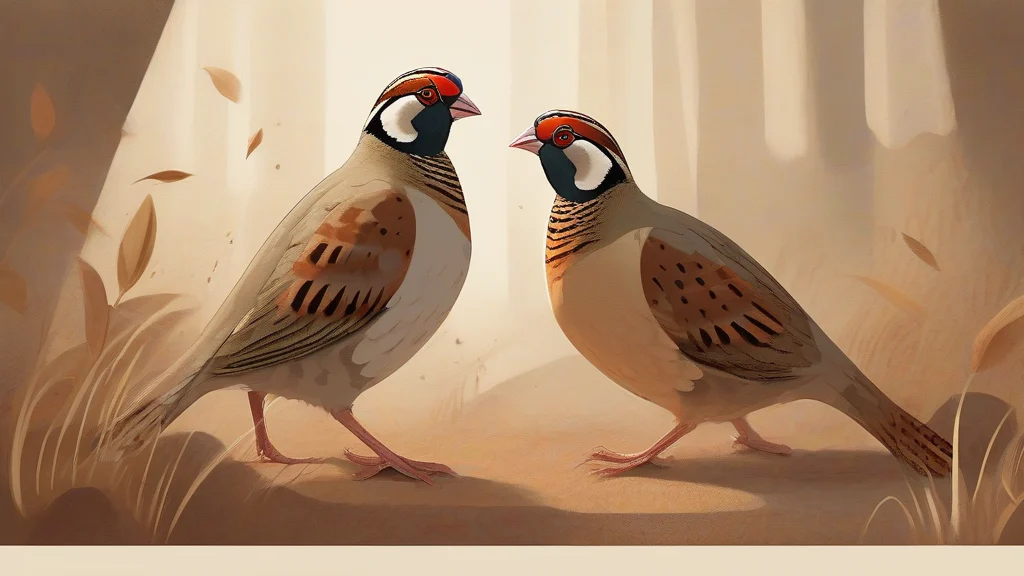
What does partridge mean?
Partridge most commonly denotes a medium-sized game bird of the pheasant family. The best-known species, the common partridge, is native to much of Europe and western Asia and is recognized by its rounded body, short tail, and usually brown or gray plumage. Partridges are ground-dwelling birds that generally feed on seeds and other plant material. Because the bird has traditionally been hunted, the word also carries sporting associations and appears in expressions such as “partridge shooting.” In modern usage, however, it ordinarily identifies the bird rather than the activity or the hunter. “A partridge in a pear tree” is the best-known cultural reference, arising from the Christmas song “The Twelve Days of Christmas.” The word also survives as a rarely used verb meaning “to hunt partridges.” Although its precise pronunciation varies between British and American English, its meaning as both a recognizable bird and a familiar part of British rural tradition remains stable.
Any of various medium-sized, ground-dwelling game birds in the pheasant family, especially the common partridge of Europe and western Asia.
"The farmer planted cover crops to provide food for the partridges."
The unqualified word most often refers to the common partridge in British usage, though partridge also appears in the names of several related species.
To hunt partridges.
"They partridged across the heath until dusk."
Archaic or literary; it is chiefly encountered in writing about traditional country sports.
The regular plural adds -s; a group may be called a covey of partridges.
"A covey of partridges hurried across the field."
One partridge can carry a pear tree in a famous Christmas carol—a reminder that this ordinary game bird has become a symbol of festive absurdity.
Reviewed by Deb Chak, Editor. AI-assisted content curated by RJS Tech Solutions LLP.
Where does partridge come from?
English borrowed the word through Old French perdrix from Latin perdix, the Latin name for a partridge. Latin perdix was itself borrowed from Greek πέρδιξ, likewise meaning “partridge,” and related forms survive in several European languages, including Spanish perdiz and Portuguese perdiz. The established English form developed during the Middle English period.
Related word forms
How partridge is actually used
The noun is standard in British and American English. British speakers often pronounce the medial consonant as /t/ with a possible following /r/, while American pronunciation commonly includes /r/. The verb is now archaic or literary.
Easily confused with partridge
A partridge is a distinct group of ground-dwelling game birds in the pheasant family, whereas quail are generally smaller birds with distinctive topknots or other identifying features.