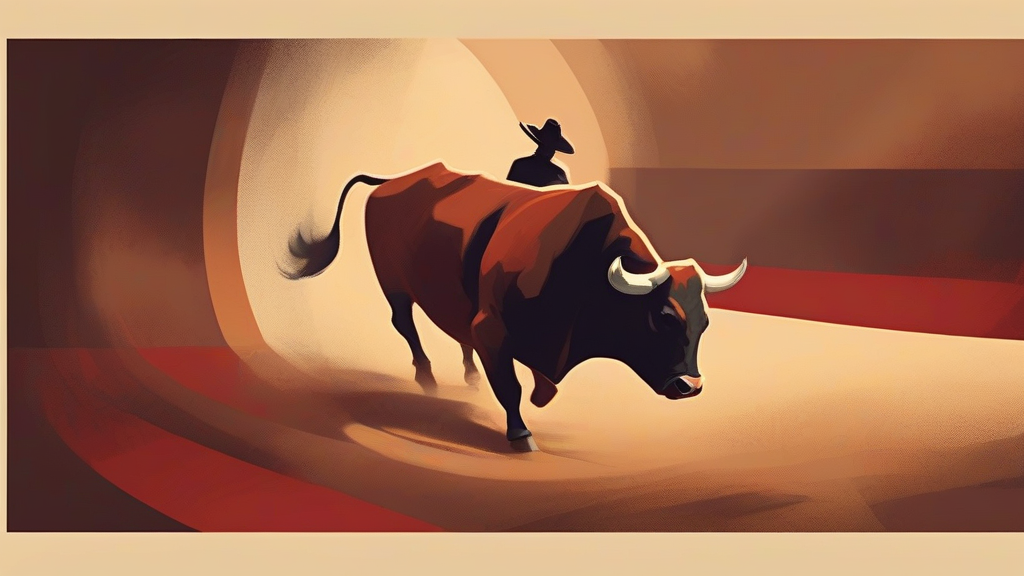
What does pase mean?
A pase refers to a pass or passage, particularly in bullfighting, where the bullfighter skillfully maneuvers the cape to provoke the bull. This term is often associated with the art of bullfighting, but it can also describe a movement or gesture in a broader sense. The pase requires great skill and precision, as the bullfighter must carefully time and position the cape to elicit the desired reaction from the bull. In a larger context, a pase can refer to any fluid and deliberate movement, showcasing the performer's agility and control.
nounA pase is a pass or a passage, especially in bullfighting, where the bullfighter makes a pass with the cape to provoke the bull.
- A pass or passage in bullfighting
- A movement or gesture in general
"The matador's skillful pase impressed the crowd at the bullfighting arena."
"The matador's pase was so close to the bull that the crowd gasped."
"The dancer's pase across the stage was fluid and effortless."
The plural form is used when referring to multiple passes or passages.
"The matador made several impressive pases during the bullfight."
Reviewed by Deb Chak, Editor. AI-assisted content curated by RJS Tech Solutions LLP.
Etymology of pase
The term pase originates from the Spanish language, where it is derived from the verb 'pasar,' meaning 'to pass.' This verb has its roots in the Latin 'passare,' which also means 'to pass.' The term has been adopted into various languages, including English, to describe a specific movement or gesture, particularly in bullfighting.
How pase is actually used
This term is often used in the context of bullfighting, but can also refer to a movement or gesture in general.