
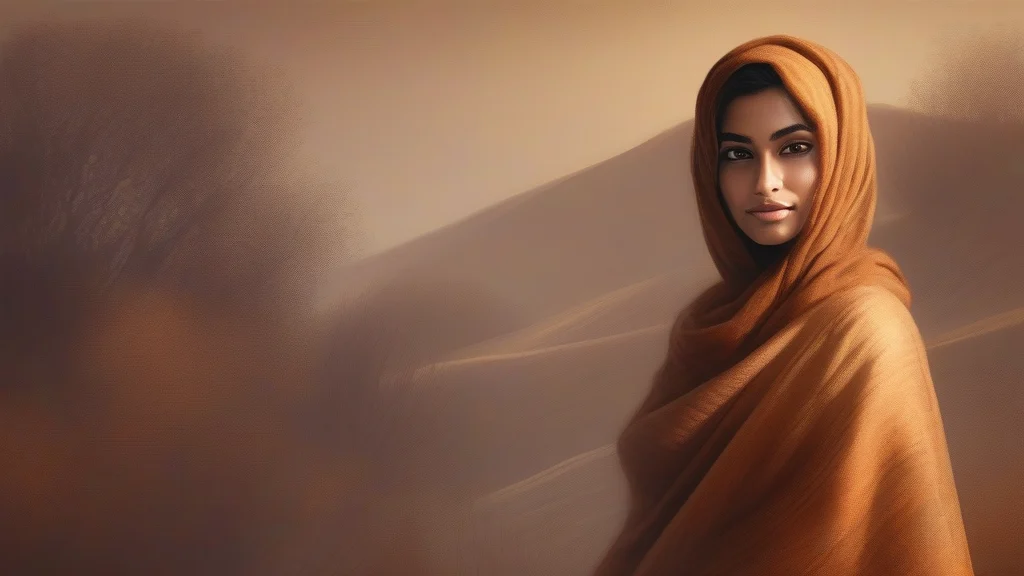
What does pashmina mean?
Pashmina is an exceptionally fine and soft wool associated with the Himalayan Changthangi goat. Traditionally, the goats are combed to collect the animals’ delicate undercoat, which is valued for producing light, warm, and durable shawls. The word is now used for both the wool itself and the finished shawls or wraps made from it. In English, pashmina often appears in phrases such as pashmina shawl and pashmina wool. Although it is sometimes used loosely as a synonym for cashmere, the traditional meaning is more specific: pashmina refers to the fine undercoat of Changthangi goats, while cashmere is the wider commercial designation for fine goat wool. The word’s associations with Kashmir, Himalayan craftsmanship, luxury, and traditional textile production make it both a precise textile term and a familiar cultural reference.
nounA fine, soft wool obtained from the undercoat of Changthangi goats, or a shawl made from this wool. Pashmina is valued for its exceptional fineness, warmth, and light weight.
- Fine wool from the undercoat of Changthangi goats, especially the goats raised in the high-altitude regions of the Himalayas.
- A lightweight shawl or wrap made from pashmina wool.
"She draped a cream pashmina over her shoulders before leaving for the evening."
"The shop sells handwoven pashmina shawls in a wide range of natural colours."
"She wore a soft pashmina to keep warm on the train."
The usual plural refers to individual shawls or garments made from pashmina.
"She keeps several pashminas for formal evening occasions."
Pashmina comes from the delicate undercoat of Changthangi goats, whose fine wool is combed from the animals without harming them.
Reviewed by Deb Chak, Editor. AI-assisted content curated by RJS Tech Solutions LLP.
Where does pashmina come from?
The word pashmina comes through South Asian usage from Persian pashm, meaning “wool,” combined with a diminutive form. It entered English in the late nineteenth century in reference to fine shawls and textiles associated with Kashmir and the Himalayan region. Persian wool terminology also underlies cashmere, which is why the two words are related in origin even though pashmina has a more specific traditional meaning.
Related word forms
How pashmina is actually used
In contemporary English, pashmina is commonly used both for the wool and for shawls made from it. It is also used attributively, as in pashmina shawl and pashmina wool. The term is sometimes used more broadly for very fine wool fabrics, but its traditional referent is the undercoat of Changthangi goats.
Easily confused with pashmina
Pashmina specifically refers to fine wool traditionally obtained from Changthangi goats, whereas cashmere is a broader commercial term for fine goat wool and fabric.