
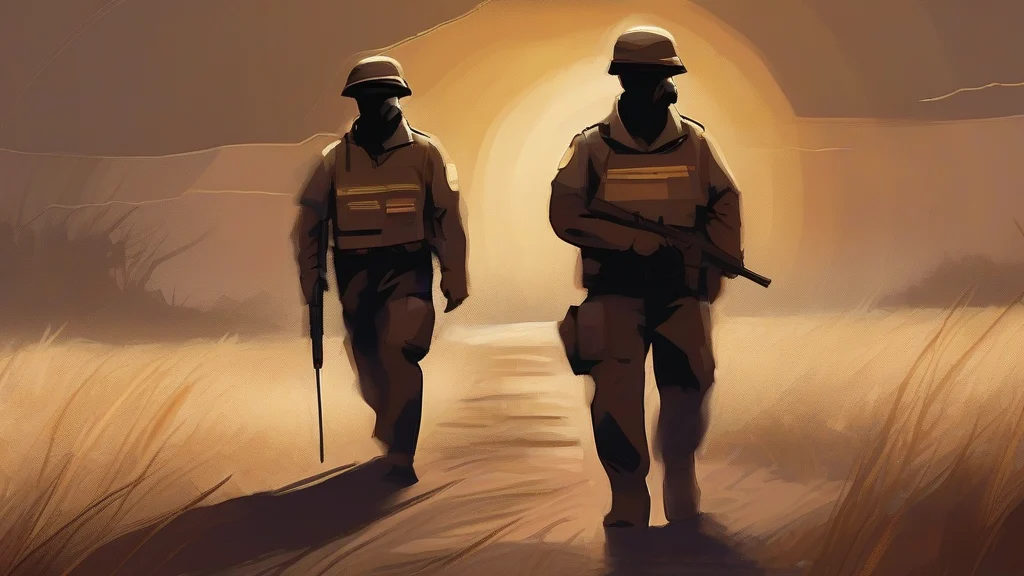
What does patrolling mean?
Patrolling means moving regularly around or through a place on watch, usually to maintain security, deter unwelcome activity, or detect problems. As a verb, it describes a continuing activity: guards may patrol a perimeter, police officers may patrol a neighbourhood, and rangers may patrol a reserve. It can also function as a participial adjective, as in a patrolling officer, or as a gerund noun referring to the activity itself. The word commonly has a purposeful and vigilant connotation, suggesting an organized watch rather than an aimless walk. It is especially frequent in discussions of policing, defence, private security, and the protection of public spaces. Patrolling is also used figuratively for regular monitoring or checking, although its literal sense remains the most common. Its vocabulary heritage is military: the underlying word entered English through French and was associated with sentries making rounds. Together, these features make patrolling a useful word for describing movement whose principal purpose is vigilance, safety, or control.
To move regularly around or through a place on watch, especially to maintain security or detect unauthorized activity.
"Security staff patrolled the grounds throughout the night."
The verb is normally used with a place, route, boundary, or area being watched.
Describing someone or something that makes regular rounds to watch over or guard an area.
"A patrolling officer stopped to speak with the building's caretaker."
This is a participial use of the verb and is common in phrases such as patrolling officer and patrolling vehicle.
The activity or duty of making regular rounds to guard, monitor, or inspect an area.
"The patrolling of the border continued throughout the night."
As a gerund noun, patrolling is usually uncountable, especially in constructions such as the patrolling of the area.
Rare and usually unnecessary; patrolling is normally used as an uncountable noun, particularly in the phrase the patrolling of.
"The reports documented several patrollings of the border zone."
Patrol entered English from a French military word associated with sentries and watchfulness, giving patrolling its distinctive sense of organized vigilance.
Reviewed by Deb Chak, Editor. AI-assisted content curated by RJS Tech Solutions LLP.
Where does patrolling come from?
The English word patrol was borrowed from French patrouille, which was derived from German Patrouille and was associated with military watchmen and rounds. Patrolling is the present participle and gerund of patrol, so it developed directly alongside the older verb. Patrolman and patroller belong to the same word family, while patrouille is a French cognate retained in the borrowed military vocabulary.
Related word forms
How patrolling is actually used
The word is neutral to formal and commonly appears in law-enforcement, military, security, and wildlife-management contexts. It suggests purposeful, systematic rounds rather than casual movement. There is no marked regional difference in usage.