
What does peon mean?
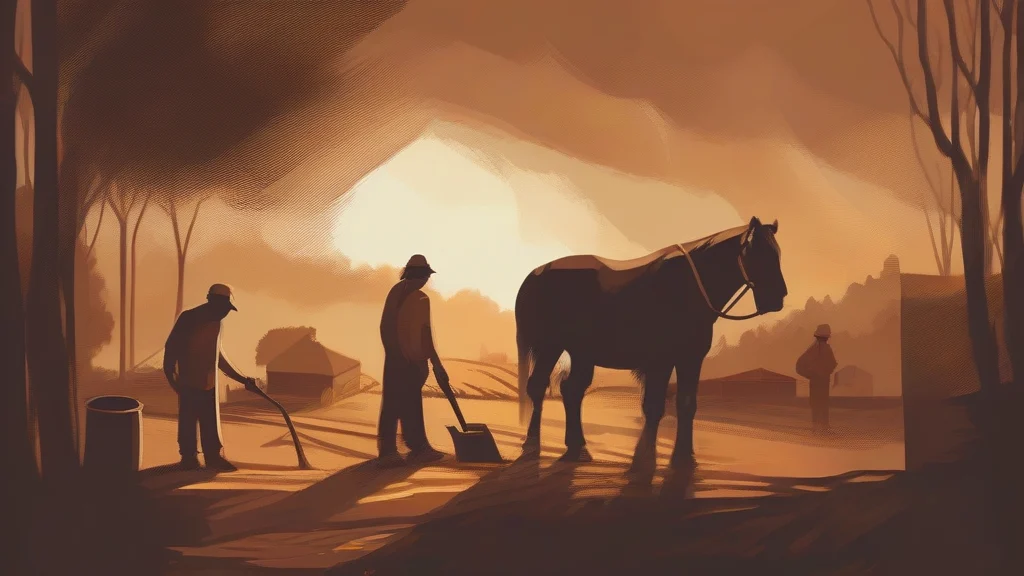
A peon is chiefly an agricultural or manual laborer, especially a person who is landless, poorly paid, or of low social status. The word is especially common in South Asian English and in accounts of Latin American and American labor history. In the Americas, it became closely associated with debt peonage, a system that could legally or economically bind workers to landowners or employers. Historically, peon could also designate a dependent servant or someone held in a servile condition. Although related to the idea of a pawn or someone placed under another person's power, its standard modern meaning refers to a laborer rather than a chess piece. Peon can sound derogatory when used casually for an exploited worker, but it remains an ordinary term in South Asian usage and an important historical term in discussions of labor, landholding, and debt.
nounA peon is an agricultural or other manual laborer, especially one with little wealth or status. Historically, the word also referred to a person in a dependent or servile condition.
- An agricultural or manual laborer, especially one who is poor, landless, or of low social status.
- In South Asian usage, a landless agricultural laborer who works for a landowner.
- Historically, a person bound to serve a master or landowner; formerly, a pawn or dependent servant.
"The tenant farmers worked as peons on estates that controlled both their housing and their livelihoods."
"Each family worked the fields as peons for the local landowner."
"The essay examines how debt peonage shaped labor relations across the American Southwest."
The plural peones is especially common in US English influenced by Spanish.
"The peons returned to the village before sunset."
In parts of the Americas, the peon became a symbol of debt labor, in which workers were legally or economically tied to the person who employed them.
Reviewed by Deb Chak, Editor. AI-assisted content curated by RJS Tech Solutions LLP.
Where does peon come from?
The English word entered use in the early 19th century from American Spanish peón, a term for a laborer or servant generally traced to Nahuatl payōn. The Spanish word had also been used for a pawn and for people occupying a dependent or servile social position. English later developed the modern agricultural sense and became strongly associated with debt peonage in Mexico, Latin America, and the southern United States.
Related word forms
How peon is actually used
The word can sound historical or derogatory when applied to modern workers. In South Asia it is generally neutral and denotes a landless agricultural laborer, while in the Americas it often carries associations with coercive labor arrangements.
Easily confused with peon
A peasant traditionally belongs to a rural farming community or class, whereas a peon is defined chiefly as a poorly paid or low-status agricultural laborer.
A pawn is a chess piece or something surrendered as security for a debt; peon is used in modern English chiefly for a manual laborer.