
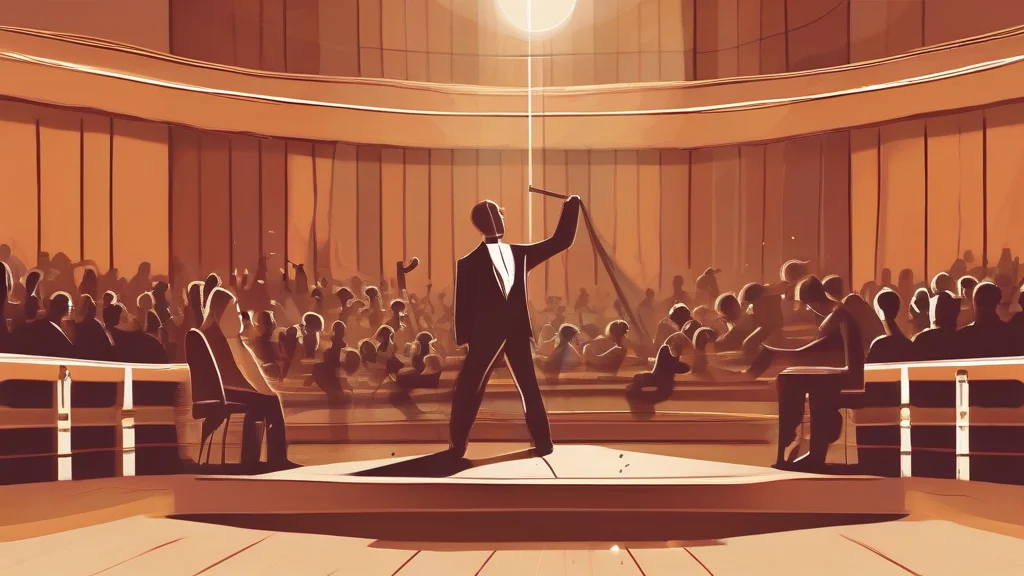
What does performance mean?
Performance means the way in which an activity, duty, or function is carried out, as well as the result of that carrying out. Someone may speak of strong or poor performance at work, in an examination, in sports, or in a practical task. The word can also describe the behavior of a machine or system, such as its reliability or efficiency. In artistic contexts, a performance is a presentation of a play, concert, film, dance, or similar work. The term often implies a standard against which success can be judged, but it does not always require formal evaluation: an actor’s performance may be compelling or unconvincing, while a car’s performance may refer to speed, handling, or reliability. Because performance combines the idea of an activity with the way it is achieved, it can refer both to the act itself and to the degree of skill or effectiveness displayed.
The act of carrying out an activity or fulfilling a role; the quality or result of an action, person, machine, or system; or an artistic presentation.
"The engine’s performance improved after the part was replaced."
The sense varies by context: it may denote an activity, its quality, its measurable result, or a staged or recorded artistic presentation.
To carry out or perform an action, especially in a formal, repeated, or conspicuous manner.
"The engine performs reliably in cold weather."
The verb is relatively uncommon compared with perform and often has a slightly formal or technical tone.
The plural is used for separate artistic presentations, activities, results, or examples of effective operation.
"The production features memorable performances by the guest artists."
The word performance began with the idea of completion: its Latin ancestor meant “to finish” or “to accomplish completely.”
Reviewed by Deb Chak, Editor. AI-assisted content curated by RJS Tech Solutions LLP.
Where does performance come from?
Performance entered English through Old French performance, a noun derived from performer, “to accomplish” or “to complete.” The ultimate source is Latin perficere, formed from per- (“thoroughly”) and facere (“to make” or “to do”), literally suggesting doing something completely. The word was initially associated with the completion of an action before developing into its modern meanings concerning acting, artistic presentation, and the quality of work or functioning. Related forms such as perform, performer, and perfection continue to reflect the same Latin root.
Related word forms
How performance is actually used
In an educational or workplace context, performance often refers to achievement or effectiveness, and it may be evaluated in either positive or negative terms. In the arts, it commonly denotes a live or recorded presentation. In technical contexts, it can describe how effectively a machine, system, or component operates.
Easily confused with performance
A performance is the result, presentation, or quality of carrying out an activity, whereas to perform is the verb describing that activity.