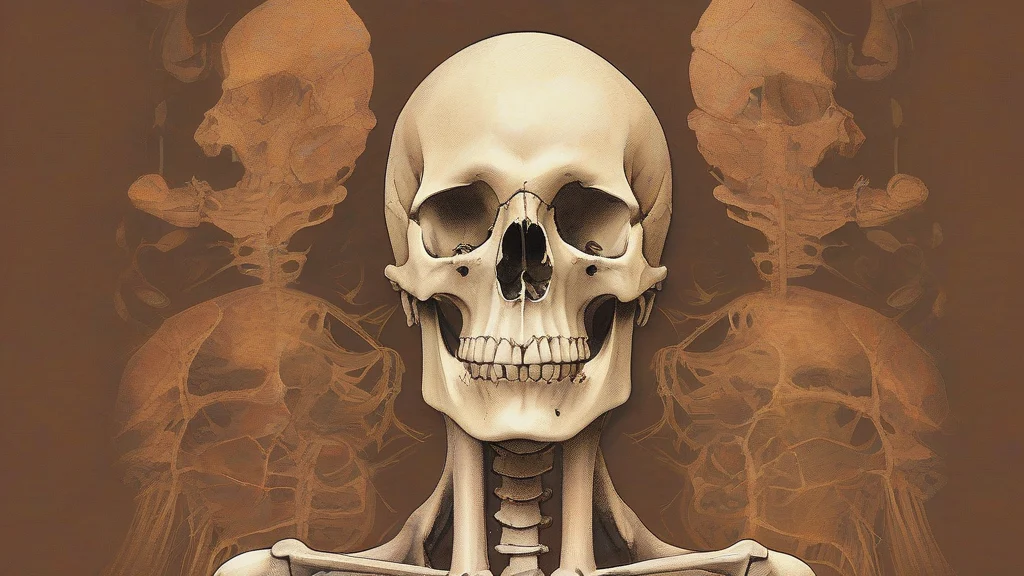
What does pericranium mean?
The pericranium is a layer of dense, fibrous connective tissue that envelops the outer surface of the skull, excluding the bones of the face. It plays a crucial role in the healing process of skull fractures and serves as a protective barrier. The pericranium is composed of two layers: a superficial layer of fibrous tissue and a deeper layer of osteogenic cells. Understanding the pericranium is essential in neurosurgery and cranial reconstruction. The term is primarily used in medical and anatomical contexts, and its knowledge is vital for medical professionals.
nounThe pericranium is a layer of dense, fibrous connective tissue that envelops the outer surface of the skull, excluding the bones of the face.
- A layer of dense, fibrous connective tissue enveloping the outer surface of the skull.
"The surgeon carefully dissected the pericranium to access the skull."
"The pericranium plays a crucial role in the healing process of skull fractures."
"The surgeon made an incision through the pericranium to expose the skull."
Reviewed by Deb Chak, Editor. AI-assisted content curated by RJS Tech Solutions LLP.
Etymology of pericranium
The term pericranium originates from the Greek words 'peri', meaning 'around', and 'kranion', meaning 'skull'. The suffix '-ium' is a Latin diminutive form. The word has been used in anatomical contexts since the 17th century.
How pericranium is actually used
The term pericranium is primarily used in medical and anatomical contexts.