
What does perigone mean?
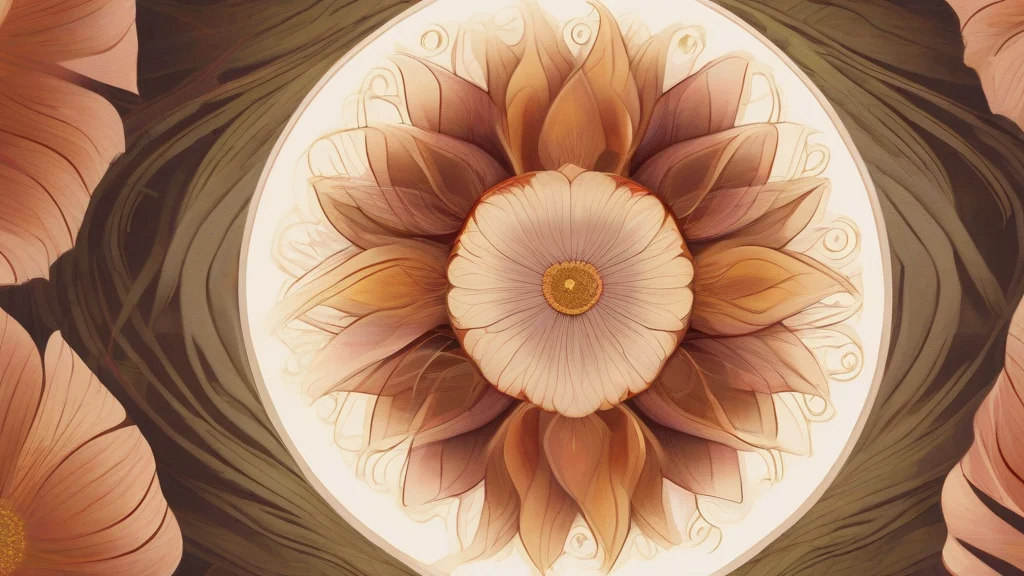
A perigone is one of the rings or whorls of modified leaves surrounding the reproductive organs of a flower. In the outer part of a typical flower, the calyx forms a perigone of sepals; farther inward, the corolla forms a perigone of petals. The term is chiefly used in botanical description and is more precise than perianth in contexts where individual floral whorls are being discussed. For example, a description of a flower may identify its calyx as the outer perigone and its corolla as the inner perigone. Because the word belongs primarily to specialist botany, it appears more often in botanical keys, academic descriptions, and detailed discussions of floral structure than in ordinary conversation. Its unusual name also reflects its structural role: these leaves form concentric protective or attractive layers around the flower's central reproductive organs.
nounOne of the concentric whorls of floral leaves surrounding a flower's reproductive organs, such as the calyx of sepals or the corolla of petals.
- A whorl of sepals, petals, or other floral leaves surrounding the reproductive organs of a flower.
"The outer perigone of the flower consists of five green sepals."
"The botanist compared the outer perigone with the leaves of its sepals."
"The diagram labels each perigone as one of the flower's concentric floral whorls."
The plural is used when referring to several individual floral whorls.
"The flower has four distinct perigones arranged in concentric rings."
Perigone comes from Greek words meaning “around” and “seed,” reflecting the whorl's position around a flower's reproductive center.
Reviewed by Deb Chak, Editor. AI-assisted content curated by RJS Tech Solutions LLP.
Where does perigone come from?
Perigone comes from Ancient Greek perigonion, a term formed from elements meaning “around” and “seed” or “offspring.” The name refers to the floral leaves arranged around a flower's reproductive center. Its root is related to that of English words such as gonad and gonium, which likewise derive from Greek forms associated with seed, generation, or anatomical structures.
Related word forms
How perigone is actually used
Chiefly botanical and relatively uncommon in general prose. It is a technical distinction from the broader term perianth: a perigone denotes one whorl, while the perianth may denote the collective non-reproductive parts of a flower.
Easily confused with perigone
A perigone is an individual whorl of floral leaves, whereas the perianth can refer to all the non-reproductive floral parts together.
The calyx is specifically the whorl of sepals, while perigone is a more general term for any floral whorl surrounding the reproductive organs.