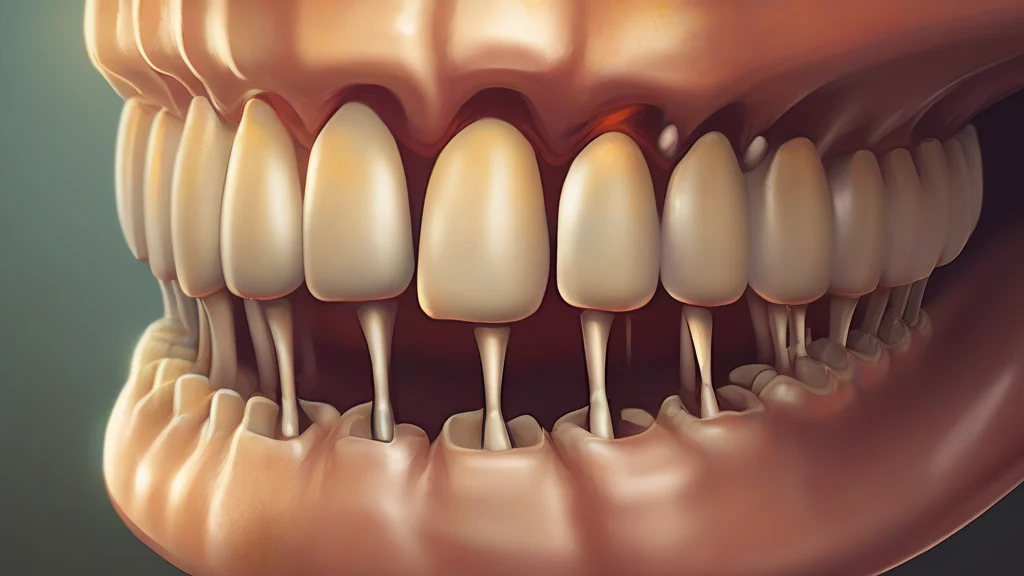
What does periodontitis mean?
Periodontitis is a bacterial infection of the gums and bone that support the teeth. It is a common condition that can lead to inflammation, pain, and potential tooth loss if left untreated. The infection is caused by the buildup of plaque and tartar on the teeth, which can lead to the destruction of the periodontal ligament and the bone that holds the teeth in place. Periodontitis can be treated with a combination of antibiotics, scaling and root planing, and good oral hygiene practices. Regular dental check-ups and cleanings can help prevent the development of periodontitis. In severe cases, surgery may be necessary to repair damaged tissue and bone. Overall, periodontitis is a serious condition that requires prompt treatment to prevent further damage and maintain good oral health.
nounA bacterial infection of the gums and bone that support the teeth, leading to inflammation and potential tooth loss.
- 1. A bacterial infection of the gums and bone that support the teeth, leading to inflammation and potential tooth loss.
"The dentist diagnosed the patient with periodontitis and recommended a thorough cleaning and antibiotics."
"The dentist diagnosed the patient with periodontitis and recommended a thorough cleaning and antibiotics."
Reviewed by Deb Chak, Editor. AI-assisted content curated by RJS Tech Solutions LLP.
Etymology of periodontitis
The word 'periodontitis' comes from the Greek words 'peri' meaning around, 'odous' meaning tooth, and 'itis' meaning inflammation. It was first used in the late 19th century to describe the bacterial infection of the gums and bone that support the teeth.
How periodontitis is actually used
Periodontitis is a formal term used in dentistry to describe the bacterial infection of the gums and bone that support the teeth. It is not commonly used in everyday conversation, but is often used in medical and dental contexts.