
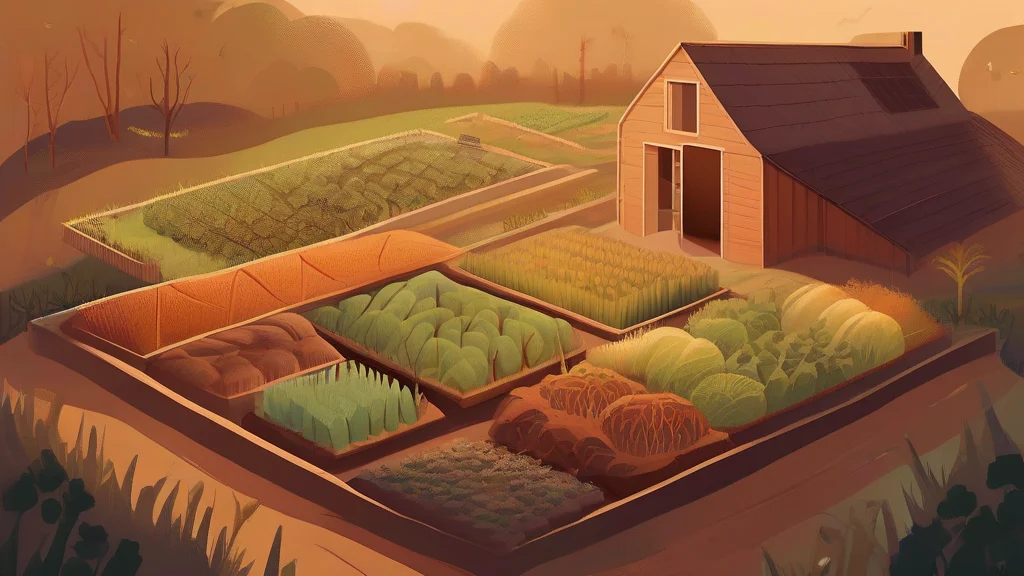
What does permaculture mean?
Permaculture is an approach to designing farms, gardens, settlements, and other human systems so that they function sustainably and draw on patterns found in nature. It seeks to conserve water and soil, reduce waste, encourage biodiversity, and create productive relationships among plants, animals, and people. The term can denote either a practical design methodology or the wider movement and community that developed around it. In gardening, permaculture often appears in ideas such as rainwater harvesting, companion planting, mulching, and integrating food production with habitat for wildlife. In larger projects, it can inform the design of communities and land use more broadly. Although sometimes treated as a general synonym for sustainable or regenerative agriculture, permaculture has a more specific identity: it combines ecological principles with an emphasis on whole-system design, long-term resilience, and efficient use of resources. The word is especially associated with the work of Bill Mollison and David Holmgren, who developed the concept and articulated it in influential publications from the late 1970s onward.
nounPermaculture is the design and management of sustainable systems that work with natural processes, emphasizing ecological resilience, efficient resource use, and minimizing waste. The term also refers to the movement, methodology, and community associated with this approach.
- A method of designing and managing agricultural and other human systems so that they imitate natural processes, remain productive, and minimize environmental harm.
- The broader movement, body of principles, and community of practice associated with this method.
- A farm, garden, settlement, or other system managed according to permaculture principles.
"The farm transformed its depleted soil into a thriving permaculture landscape filled with diverse crops and wildlife."
"She teaches practical permaculture, emphasizing soil health, water conservation, and beneficial relationships among plants and animals."
"The community garden demonstrates permaculture through rainwater harvesting, companion planting, and the recycling of organic waste."
The plural is uncommon and is used mainly for multiple permaculture sites, systems, or communities.
"The project connects permacultures in several countries through shared research and training."
Permaculture turns the old ambition to create a permanent culture into a practical quest for farming and settlement that can endure without damaging the planet.
Reviewed by Deb Chak, Editor. AI-assisted content curated by RJS Tech Solutions LLP.
Where does permaculture come from?
Permaculture was coined in the late 1970s by Australian researchers Bill Mollison and David Holmgren. It combines the sense of “permanent” with “agriculture,” expressing the aim of developing agriculture that can be sustained over the long term. The underlying roots are older: “permanent” comes through French from Latin permanere, “to remain,” while “agriculture” combines Latin ager, “field,” with colere, “to cultivate.”
Related word forms
How permaculture is actually used
The term is used in environmental design, agriculture, ecology, and education. In everyday speech it may sometimes be used broadly for almost any environmentally friendly practice, although its recognized principles are more specific. The adjectival form is chiefly used in technical and educational contexts.
Easily confused with permaculture
Agriculture is the broad practice of cultivating crops and livestock, whereas permaculture is a particular design approach that seeks to create sustainable systems by working with ecological processes.
Regenerative agriculture focuses especially on restoring soil health and ecosystem function, while permaculture encompasses a wider approach to designing and managing human settlements, farms, and other systems.