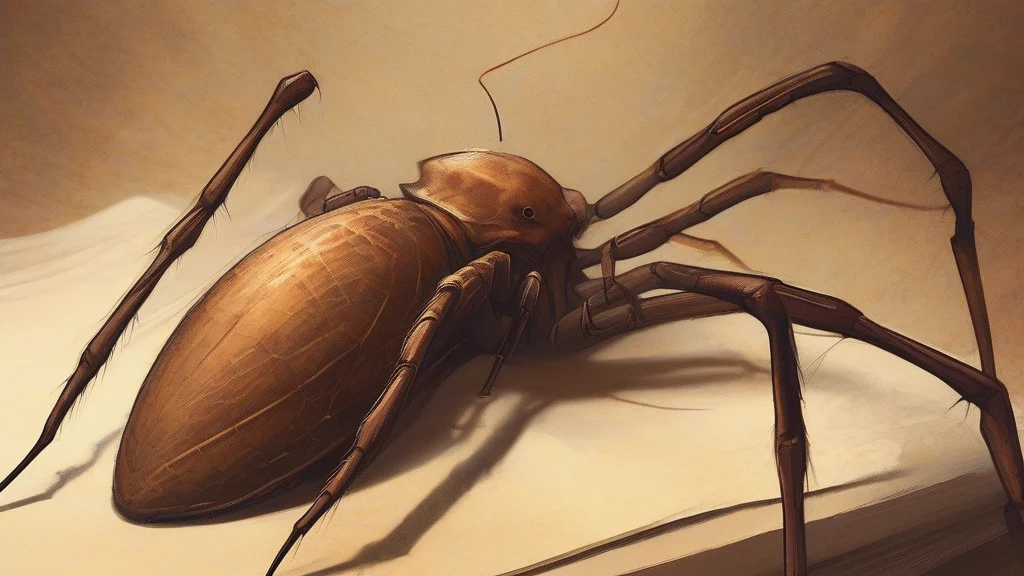
What does phalangid mean?
A phalangid, also known as a daddy long legs or harvestman, is a type of arachnid belonging to the order Opiliones. Characterized by their extremely long, thin legs, phalangids are often mistaken for spiders but are distinct due to their body structure and behavior. Unlike spiders, phalangids do not produce silk and have a unique way of moving. They play a beneficial role in ecosystems by controlling insect populations. The term is mainly used in scientific contexts, while 'daddy long legs' is more commonly used in general discourse. Phalangids are found in various environments and are recognized by their remarkable leg span, which can be several times the length of their body.
nounA phalangid refers to a type of arachnid, specifically a daddy long legs spider, which belongs to the order Opiliones. These arachnids are characterized by their extremely long, thin legs.
- A type of arachnid
- An arachnid with extremely long, thin legs
"The phalangid scurried across the floor, its long legs moving rapidly as it searched for shelter."
"The phalangid is often mistaken for a spider due to its similar appearance."
"In some regions, phalangids are considered beneficial due to their role in controlling insect populations."
Used for countable, individual arachnids.
"The garden had several phalangids living among the plants."
Reviewed by Deb Chak, Editor. AI-assisted content curated by RJS Tech Solutions LLP.
Etymology of phalangid
The term 'phalangid' originates from the Greek word 'phalangion', which refers to a type of spider. The order Opiliones, to which phalangids belong, has a complex history, with fossil records dating back to the Paleozoic era. The name 'Opiliones' is derived from the Latin 'opilio', meaning 'shepherd'.
How phalangid is actually used
The term 'phalangid' is primarily used in scientific and entomological contexts. In general usage, 'daddy long legs' is more commonly used.