
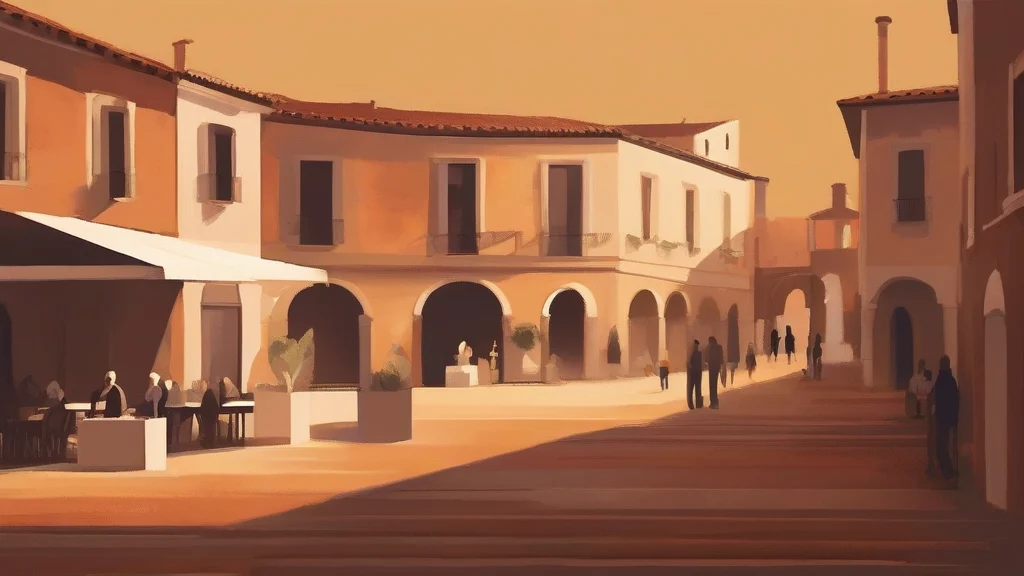
What does piazza mean?
A piazza is a public square, especially one in an Italian town or city. The word suggests a space used for everyday social life as well as civic occasions: people may gather there to meet, eat at cafés, attend festivals, watch performances, or simply relax. In English, piazza is particularly common when discussing Italian architecture, tourism, and historic town centers, though it is also used for Italian-style public spaces elsewhere. The related word plaza is more typical of Spanish-speaking cities, but the two are often nearly interchangeable when identifying the central public square of a town. Piazze is the common Italian plural, while the regular English plural is piazzas. Because piazza retains the atmosphere and cultural associations of Italian urban life, it can convey more than the neutral word square.
nounA public square in a town or city, especially one in Italy. The word may also refer to a similar open urban space in places influenced by Italian culture.
- A public square or open space in a town or city, especially in Italy or an Italian-influenced community.
"We sat in the piazza, drinking coffee and watching the evening crowds."
"The festival filled the piazza with musicians, dancers, and food stalls."
"Their apartment overlooks the quiet piazza of the old town."
The regular English plural is piazzas. The Italian plural piazze is sometimes encountered when referring specifically to Italian squares.
"Several piazzas were designed around churches and civic buildings."
Rome has many famous piazzas, but the word can also name the everyday public squares of much smaller Italian towns.
Reviewed by Deb Chak, Editor. AI-assisted content curated by RJS Tech Solutions LLP.
Where does piazza come from?
The English word comes from Italian piazza, an older form of the modern Italian piazza's source meaning an open public square. Italian piazza derives from Latin platea, a broad open place or street, which was borrowed from Greek plateia, meaning broad or flat. The same Latin source underlies Spanish plaza, French place in the sense of an inhabited location, and English place; it also lies behind English plateau and platitude.
Related word forms
How piazza is actually used
In standard English, piazza is most natural for Italian squares and may sound evocative, architectural, or touristic. It can also be used in North America and elsewhere for a public square associated with an Italian community.
Easily confused with piazza
A piazza is especially an Italian-style public square, whereas plaza is more commonly used for the central square of a Spanish-speaking city.