
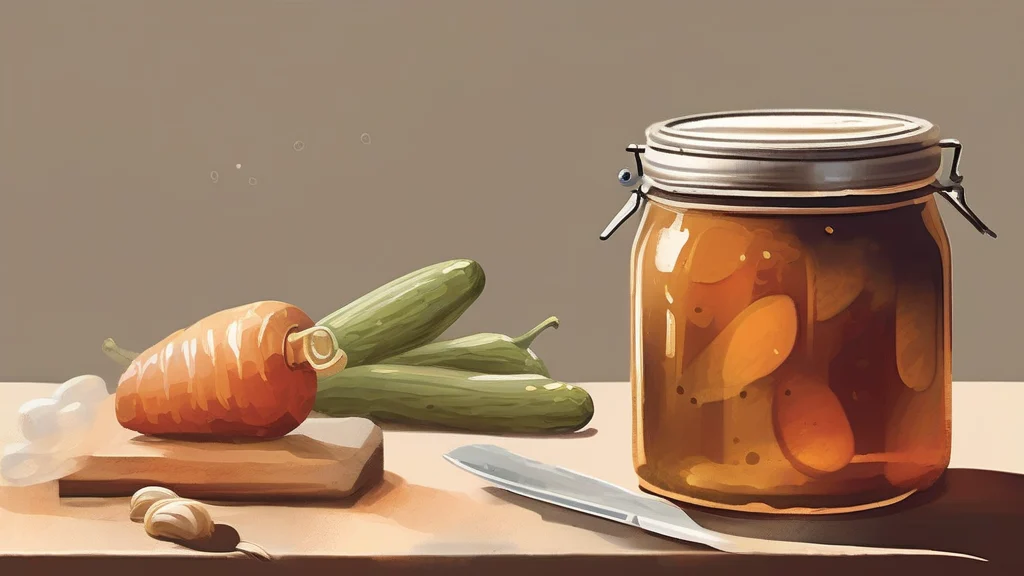
What does pickling mean?
Pickling is the process of preserving food by immersing it in a seasoned brine, vinegar, or similar acidic solution. The technique is especially associated with vegetables such as cucumbers, carrots, onions, and peppers, which become crunchy and acquire a sharp, salty, or sour flavor. The term also has a technical industrial meaning: pickling is the treatment of metal with acid to remove surface oxides, scale, or other impurities, often as preparation for painting, plating, or further processing. In general use, pickling usually describes food preservation, while its industrial sense is familiar in manufacturing and metalworking. The word is useful because it connects an everyday culinary practice with a specialized chemical process whose basic principle—using an acidic solution to alter and preserve a material—is closely related.
The process of preserving food in a seasoned brine, vinegar, or similar solution; also, the chemical treatment of metal with acid to remove impurities or surface oxides.
"Pickling can give vegetables a distinctive sour and salty flavor."
The food-preservation sense is dominant in everyday use. The metalworking sense is technical and common in industrial contexts.
The present participle of “pickle,” meaning preserving food in brine or vinegar or treating metal with acid.
"The factory is pickling the metal before the next stage of production."
This is a regular verb form and is normally used in continuous constructions or before a noun.
Usually a mass noun referring to the process or technique, and therefore ordinarily has no plural. “Picklings” is uncommon and may refer to separate instances or batches of preserved food.
"The cook prepared several picklings for the market."
The same word describes two very different transformations: preserving vegetables in brine and cleaning metal with acid.
Reviewed by Deb Chak, Editor. AI-assisted content curated by RJS Tech Solutions LLP.
Where does pickling come from?
“Pickling” is formed from the verb “pickle.” The English word “pickle” appeared in Middle English in senses connected with brine and the preservation of food, although its ultimate origin is uncertain. Modern uses for treating metal with acid developed from the broader sense of immersing or treating an object in a chemical solution.
Related word forms
How pickling is actually used
In its most common sense, pickling refers to food preservation and is widely used in both formal and informal contexts. In industrial contexts, it can also mean acid treatment of metal. As a gerund, it is commonly used before a noun, as in “pickling solution” or “pickling vegetables.”