What does pieta mean?
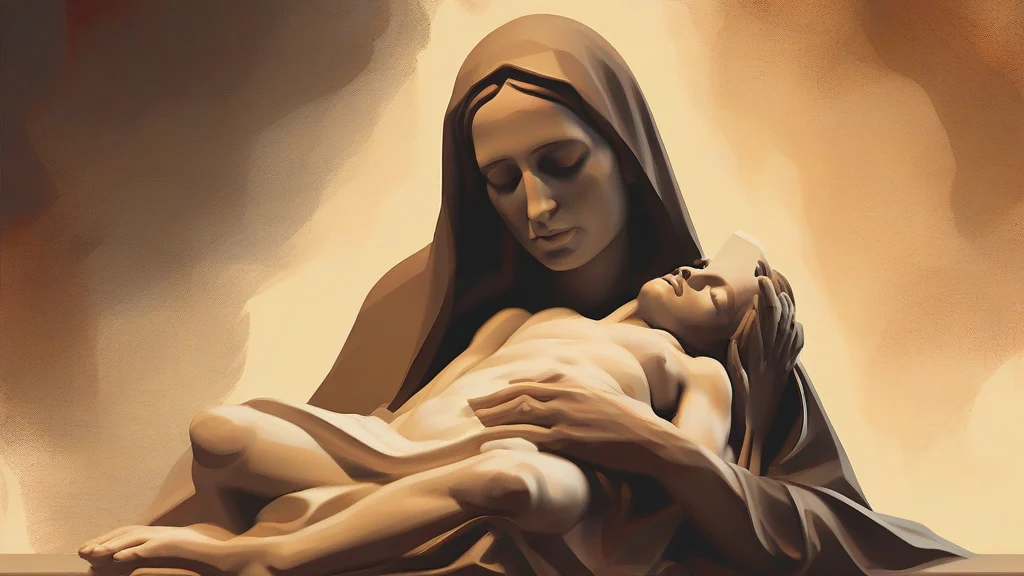
The Pieta is a sculpture or painting that depicts the Virgin Mary holding the body of Jesus Christ after his crucifixion. It is a masterpiece of Renaissance art, created by Michelangelo in 1498-1500. The Pieta is often considered one of the most famous works of art in history, and it is widely regarded as a symbol of the emotional depth and skill of the artist. The term 'Pieta' can refer to a specific work of art, but it can also describe a broader category of sculptures or paintings depicting the Virgin Mary holding the body of Jesus Christ. The Pieta is a powerful and moving work of art that continues to inspire and awe people around the world. It is a testament to the enduring power of art to evoke emotions and to capture the human experience.
nounA sculpture or painting depicting the Virgin Mary holding the body of Jesus Christ after his crucifixion, often created by Michelangelo.
- A sculpture or painting depicting the Virgin Mary holding the body of Jesus Christ after his crucifixion.
"The Pieta is one of the most famous works of Renaissance art, showcasing the artist's skill in capturing the emotional depth of the scene."
"The Pieta is a masterpiece of Renaissance art, created by Michelangelo in 1498-1500."
Reviewed by Deb Chak, Editor. AI-assisted content curated by RJS Tech Solutions LLP.
Etymology of pieta
The term 'Pieta' comes from the Italian word 'pietà', which means 'pity' or 'compassion'. This word is derived from the Latin 'pietas', which means 'piety' or 'devotion'. The term 'Pieta' was first used to describe a sculpture or painting depicting the Virgin Mary holding the body of Jesus Christ, and it has since become a widely recognized term in the art world.
How pieta is actually used
The term 'Pieta' is often used to describe a specific work of art, but it can also refer to a broader category of sculptures or paintings depicting the Virgin Mary holding the body of Jesus Christ.