
What does pincushion mean?
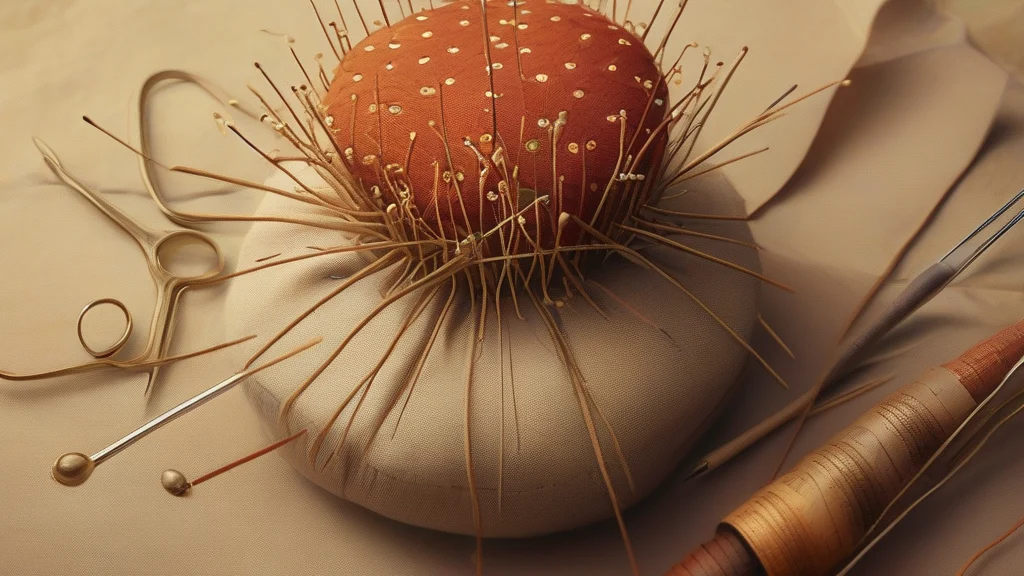
A pincushion is a small, padded object used to hold sewing pins and needles, keeping them organized and preventing them from being lost or causing accidental injury. It is commonly associated with sewing, tailoring, and other needlework. The word also has a figurative use: a person or group described as a pincushion receives many blows, attacks, complaints, or criticisms. This figurative expression often suggests that the recipient is exposed to repeated jabs from different directions and is unable to avoid them. The term is straightforward and recognizable, combining the specific functions of a pin and a cushion in a single compound noun. Its literal meaning is practical, while its figurative meaning adds a memorable image of being continually prodded, wounded, or criticized.
A small, usually soft cushion in which pins and needles are kept.
"The pincushion sat beside the scissors on the worktable."
Often made from fabric and filled with a soft material; commonly used in sewing and needlework contexts.
A person or thing subjected to repeated blows, attacks, or criticisms.
"After the match, the goalkeeper felt like a pincushion."
Informal and figurative; usually implies persistent or numerous attacks from multiple sources.
The regular plural is “pincushions.”
"She placed several pincushions around the workshop."
From a practical tool for keeping sewing pins in one place to a vivid metaphor for someone who takes an endless barrage of jabs, “pincushion” has made the small cushion a symbol of being stuck full of points.
Reviewed by Deb Chak, Editor. AI-assisted content curated by RJS Tech Solutions LLP.
Where does pincushion come from?
“Pincushion” is a compound formed in the late Middle English or early modern period from “pin” and “cushion.” “Pin” comes from Old English pinnc, originally referring to a pointed or projecting object, while “cushion” entered English from Old French cushin and ultimately from Latin culcita, a mattress or padded covering. The compound arose from the common practice of storing pins in a padded container. The figurative use developed later by analogy with the appearance of a cushion filled with numerous pins.
How pincushion is actually used
The literal sense is standard in everyday and craft contexts. The figurative sense is informal and usually carries the implication of repeated, painful, or relentless criticism or attacks.
Easily confused with pincushion
“Pincushion” is the standard closed compound, while “pin cushion” is a less usual two-word spelling, though it is also accepted.