
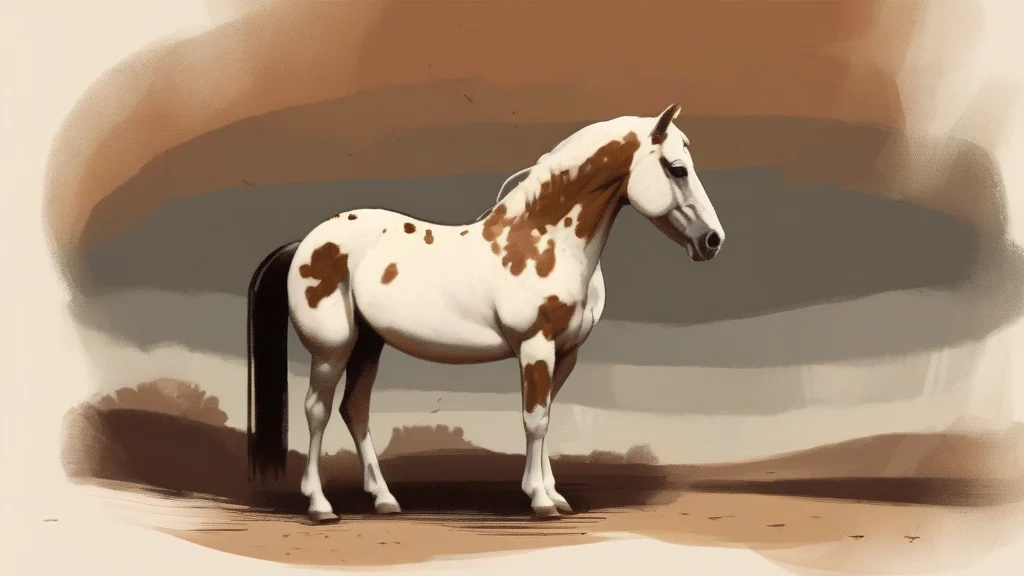
What does pinto mean?
Pinto is chiefly a North American noun for a horse whose coat has conspicuous patches of one color mixed with another. It may also denote a mottled variety of common bean, normally called a pinto bean. The related adjective describes an animal with such a patchwork coat. In horse terminology, pinto refers to coloration rather than to a single breed, and a Paint Horse is a particular breed that may itself have pinto coloring. The word is also familiar as the name of one of the best-known dry beans, recognized by its beige-and-brown speckling. In ordinary use, “pinto” is especially associated with ranching, American Western culture, and food descriptions. Its Spanish origin explains the imagery: the source word referred to an animal that looked painted or spotted. Today the term remains particularly associated with the American West, though it is also understood and used in British English.
A horse with a coat marked by conspicuous patches of one color against another; also, a mottled variety of common bean.
"The breeder selected the pinto for its calm temperament and striking markings."
Having a coat marked by contrasting patches of white or another color; spotted or piebald.
"The pinto mare and her foal stood together in the field."
Both plural forms are established, although pintoes is especially common when referring to the beans.
"She rinsed the pintoes before cooking them."
Its Spanish source means “spotted” or “painted,” so the name vividly describes the animal’s patchwork coat.
Reviewed by Deb Chak, Editor. AI-assisted content curated by RJS Tech Solutions LLP.
Where does pinto come from?
The English word entered use in the 19th century in the American West, borrowing the Spanish pinto, meaning “spotted” or “painted,” a term associated with multicolored cattle and later horses. Spanish pinto ultimately continues Latin pictus, the past participle of pingere, “to paint.” The same Latin root underlies English words such as paint, painter, painted, and picture.
How pinto is actually used
In equestrian terminology, pinto primarily denotes a coat pattern rather than a single breed. The word is especially familiar in American ranching and Western culture, while the bean sense is common in culinary contexts on both sides of the Atlantic.
Easily confused with pinto
Pinto can describe an animal with contrasting patches of any colors, whereas piebald is more specifically associated with black-and-white or white-and-brown markings.