
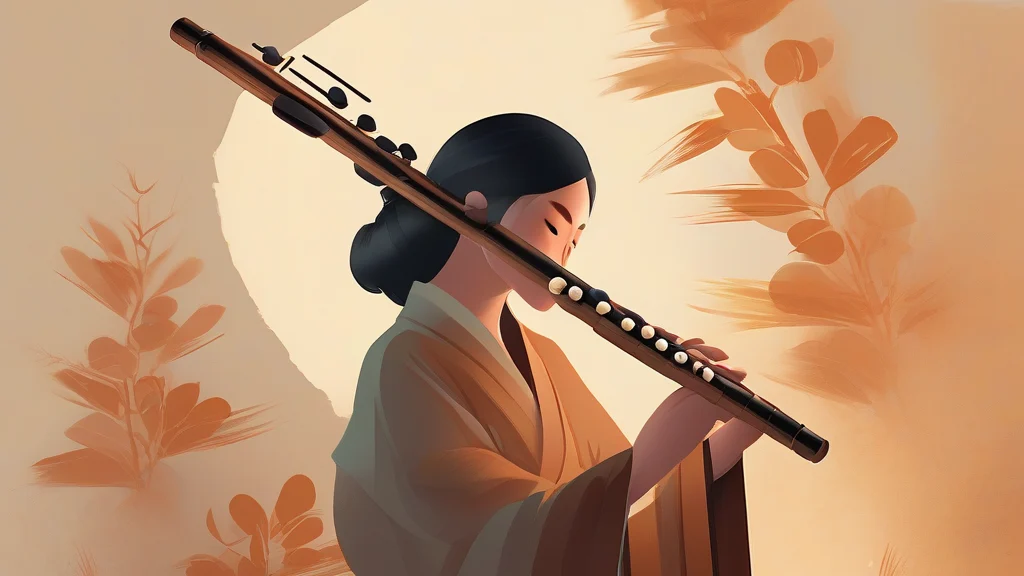
What does pipa mean?
A pipa is a traditional Chinese stringed instrument belonging to the lute family. It has a pear-shaped wooden body, four strings, and movable frets that allow performers to bend notes and create a wide range of glissandi and other vocal-like effects. The instrument is generally held upright, sometimes resting on the lap or against the chest, and is played with plectra attached to the fingers. Pipas have a long association with Chinese court music, scholarly culture, opera, and regional traditions. Today they are also performed in contemporary classical, experimental, and fusion music. Although often informally described simply as a Chinese lute, the pipa has its own construction, technique, and repertoire. The word refers specifically to the instrument rather than to the broader category of Chinese plucked zithers.
nounA traditional Chinese lute with a pear-shaped wooden body, four strings, and movable frets, usually played with plectra while held upright.
- A traditional Chinese plucked string instrument with a pear-shaped body, four strings, and movable frets.
"The musician gently plucked the pipa as the audience listened."
"She studied pipa at a conservatory before performing throughout East Asia."
"The painting depicts a musician playing a pipa in a palace courtyard."
The standard plural of pipa; a single pipa can be called a pipa or, when context requires clarification, a Chinese pipa.
"The collection includes several rare pipas made by twentieth-century Chinese luthiers."
With its four strings, movable frets, and pear-shaped body, the pipa is often described as the lute of ancient Chinese poetry.
Reviewed by Deb Chak, Editor. AI-assisted content curated by RJS Tech Solutions LLP.
Where does pipa come from?
The English word pipa is borrowed from Chinese pípá, the name of the instrument and the Chinese term written 琵琶. The word entered English usage during the eighteenth century through descriptions of Chinese music and culture. The same Chinese characters are also represented in Japanese as biwa, a related name for the Japanese instrument derived from the Chinese tradition.
How pipa is actually used
The term is not ordinarily used as a synonym for a lute in general. It is most common in discussions of Chinese and East Asian music.
Easily confused with pipa
A pipa is a plucked stringed instrument, whereas a pipe is generally a wind instrument played by blowing or blowing across an opening.