
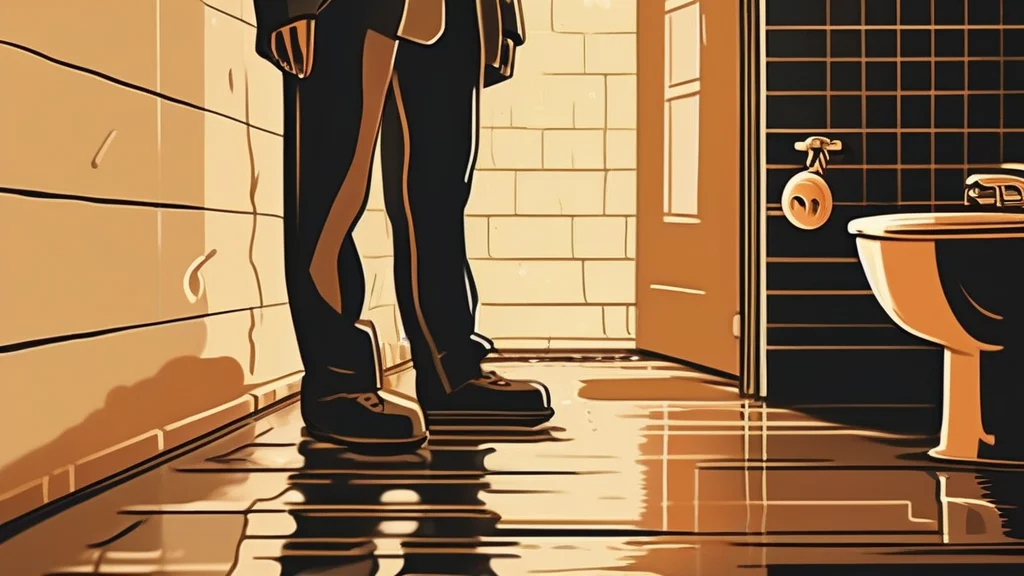
What does pissing mean?
“Pissing” is a vulgar English word that means urinating or passing urine. As a present participle, it shows an action in progress, as in “He was pissing in the wind”; it can also stand alone as a noun naming the act itself, as in “The dog was startled by the pissing.” The word is blunt, undignified, and strongly associated with informal speech, comedy, and casual or crude conversation, rather than formal writing or polite public discourse. Although it may sound especially familiar in British English, it is understood across English-speaking communities. Because “pissing” is derived directly from the verb “piss,” it has a straightforward meaning but carries a much stronger social taboo than neutral expressions such as “urinating” or “making water.” Its usefulness is therefore primarily practical: it conveys the meaning immediately and unmistakably while clearly marking the speaker’s informal register or humorous intent.
To urinate or pass urine.
"They were pissing behind the building."
Informal and vulgar; usually used to describe an action in progress.
The act of urination.
"The sound of the pissing could be heard in the hallway."
Informal and vulgar; often used in crude, comic, or strongly colloquial contexts.
Although “pissing” looks like a standard present participle, it can also stand alone as a crude noun for urination, making it one of English's most direct and unmistakable vocabulary choices.
Reviewed by Deb Chak, Editor. AI-assisted content curated by RJS Tech Solutions LLP.
Where does pissing come from?
The word belongs to a long-standing Germanic vocabulary of urination. The base verb is Middle English in origin and is generally traced to Old Norse, with related forms found in Dutch and German. In modern English it developed into the familiar family that includes “piss,” “pisses,” “pissed,” and the agent noun “pisser.” “Pissing” is the present-participle form of the base verb and is now also used independently as a noun for urination.
Related word forms
How pissing is actually used
Informal and generally considered vulgar, especially in British English. It is used with friends or in deliberately crude or comic contexts and is inappropriate for formal writing. The form can function as the present participle of a verb or as a noun for the act.
Easily confused with pissing
“Pissing” is a vulgar verb form referring to urination, whereas “missing” is an adjective or participle meaning absent or overlooked.