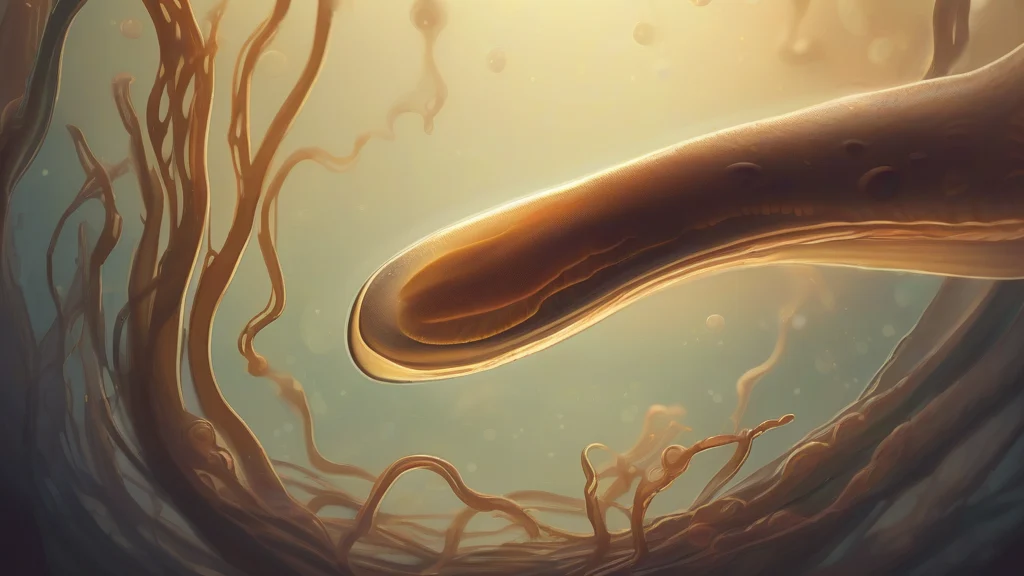
What does planarian mean?
A planarian is a type of freshwater flatworm that belongs to the phylum Platyhelminthes. Characterized by its flat, unsegmented body, the planarian is known for its remarkable ability to regenerate lost body parts, including its head and tail. This ability has made planarians a popular subject in scientific research, particularly in the fields of biology and zoology. Planarians are typically found in freshwater environments and are an important part of the aquatic ecosystem. They are also used as a model organism in studies of regeneration and tissue repair.
nounA planarian is a type of freshwater flatworm that belongs to the phylum Platyhelminthes. It is characterized by its flat, unsegmented body and ability to regenerate lost body parts.
- A type of freshwater flatworm.
- A member of the phylum Platyhelminthes.
"The scientist studied the planarian's remarkable ability to regenerate its head and tail."
"The planarian's body is capable of regenerating lost tissue."
"Planarians are often used in scientific research due to their unique characteristics."
The plural form 'planarians' is used to refer to multiple individuals of this type of flatworm.
"The researcher studied several planarians in her laboratory."
Reviewed by Deb Chak, Editor. AI-assisted content curated by RJS Tech Solutions LLP.
Etymology of planarian
The term 'planarian' is derived from the Latin word 'planus,' meaning 'flat.' This refers to the flat, unsegmented body of the planarian. The planarian belongs to the phylum Platyhelminthes, which includes other types of flatworms. The phylum Platyhelminthes is thought to have evolved from a common ancestor with other invertebrate phyla.
How planarian is actually used
The term 'planarian' is typically used in a scientific or academic context, particularly in the fields of biology and zoology.