
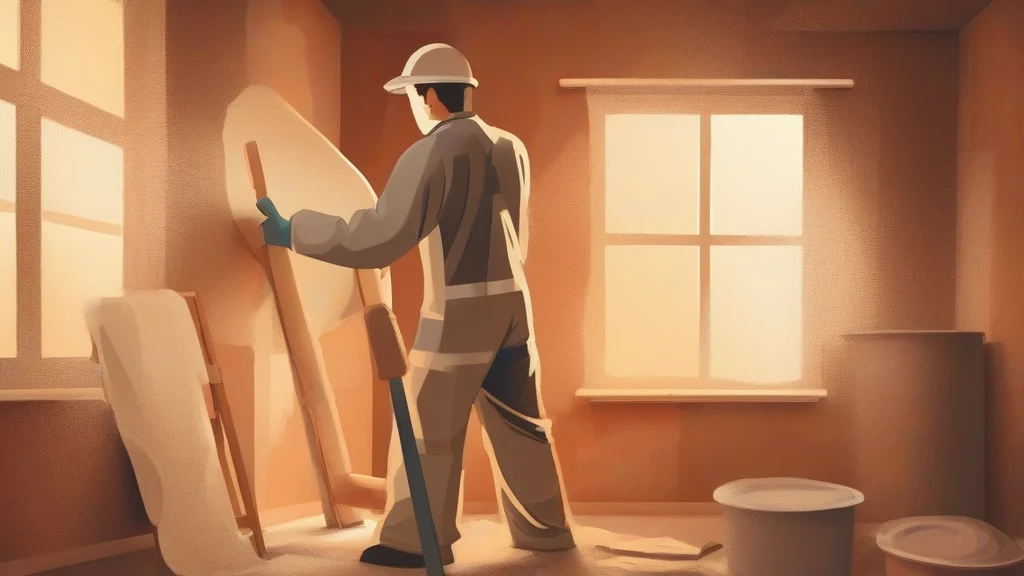
What does plasterer mean?
A plasterer is a skilled worker who applies plaster to walls, ceilings, and similar surfaces, producing a smooth finish or repairing damaged masonry. The role may also involve preparing the surface, mixing and applying plaster, and adding decorative textures or mouldings. The word is occupational and is often used when someone is hired to restore or finish part of a building. Although plastering is sometimes performed as part of a broader decorating job, a plasterer normally has specialized knowledge of working with wet plaster and creating an even, durable surface. In everyday use, the term is more specific than a general decorator or builder. It can also be used figuratively in political and industrial contexts, particularly in expressions suggesting a role devoted to preserving or restoring an older institution. The word’s history connects it with plaster, whose name ultimately derives from a Greek word associated with molding or shaping.
nounA plasterer is a person whose occupation is to apply plaster to walls, ceilings, and other surfaces.
- A person professionally engaged in applying plaster to walls, ceilings, and other architectural surfaces.
"We hired a plasterer to repair and smooth the cracked ceiling."
"The plasterer carefully smoothed the fresh plaster across the damaged wall."
"A trained plasterer can restore an old ceiling while preserving its original appearance."
The regular plural is used when referring to several people employed as plasterers.
"Several plasterers were needed to finish the large restoration project."
A plasterer shares an ancient Greek root with plastic: both trace back to the idea of something being molded or shaped.
Reviewed by Deb Chak, Editor. AI-assisted content curated by RJS Tech Solutions LLP.
Where does plasterer come from?
The word plasterer is formed from plaster with the occupational suffix -er, meaning “one who does or works with” the preceding substance. Plaster entered English through Old French plastre from Latin plastrum, a form related to Latin plastēs and ultimately Greek plastos, meaning “molded” or “formed.” Words such as plastic and plasticity belong to the same broader Greek root.
Related word forms
How plasterer is actually used
The term is occupational and normally implies a person who applies plaster as part of construction or interior finishing. It is used in both British and American English, with the usual pronunciation difference between the two varieties.