
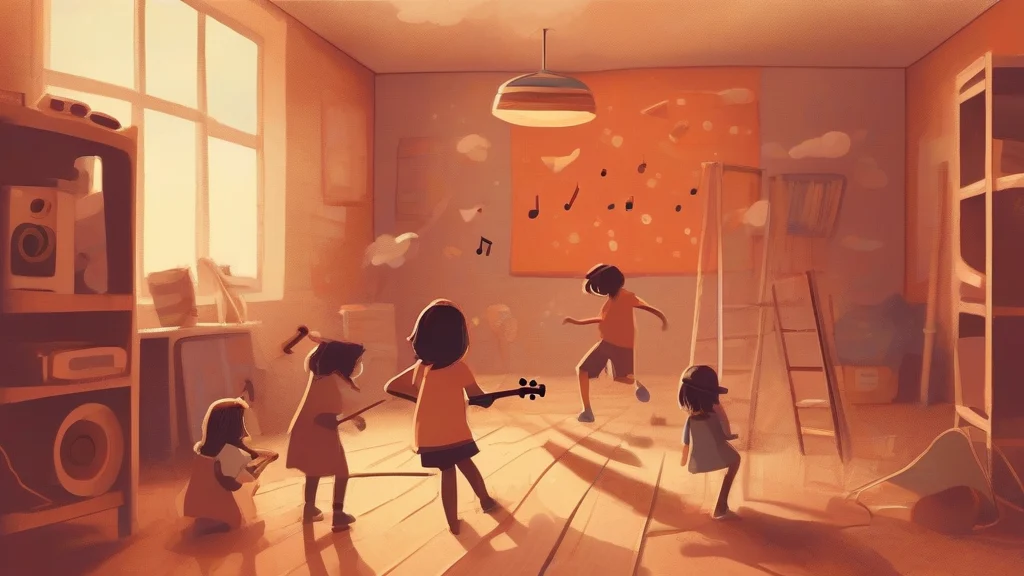
What does play mean?
Play is a versatile English word with both verbal and noun uses. As a verb, it most commonly means to take part in a game, sport, or other activity for enjoyment, although it can also mean to perform a role, operate an instrument, or describe a particular way of behaving. As a noun, play refers to recreation or a game, but it can also denote a theatrical performance, a complete performance of a work, or the scope available for action. Phrases such as fair play, play a role, and play with fire are idiomatic rather than merely literal. The word appears in everyday speech, education, sports, theatre, law, and business. Because it combines ideas of activity, performance, and interaction, play is especially useful for describing both purposeful participation and behaviour undertaken for pleasure.
To engage in an activity, game, or sport for enjoyment or recreation; to participate in a contest; or to perform a role.
"The teams will play the final on Sunday afternoon."
The sense 'perform a role' is especially associated with theatre, film, and literature.
An activity undertaken for enjoyment or recreation; a game or contest; or a theatrical performance.
"The play received enthusiastic reviews when it opened in London."
In phrases such as fair play and a play for time, the noun has idiomatic meanings involving rules, strategy, or delay.
The standard plural is plays, especially for individual games, theatrical performances, or completed actions.
"The team has won six plays this season."
Play began as a word for physical activity and exertion, but English later narrowed it to games, recreation, and performance.
Reviewed by Deb Chak, Editor. AI-assisted content curated by RJS Tech Solutions LLP.
Etymology of play
The word comes from Old English plegan, meaning to exercise, engage in activity, or take part in a game or performance. Its development gradually emphasized recreation and amusement while retaining senses connected with movement, performance, and freedom of action. The English word has close relatives in other Germanic languages, including Dutch pleigen and German spielen, which likewise refer to playing or sporting activity.
Related word forms
How play is actually used
The word is common in both formal and informal English. In phrases such as play a role, play with fire, and play for time, it can convey strategic, risky, or delaying meanings beyond simple recreation.
Easily confused with play
A player takes part in a game or performance, whereas prey is the animal or person hunted by a predator.
Play refers to an activity or performance, while pay means money given in return for work or a service.