
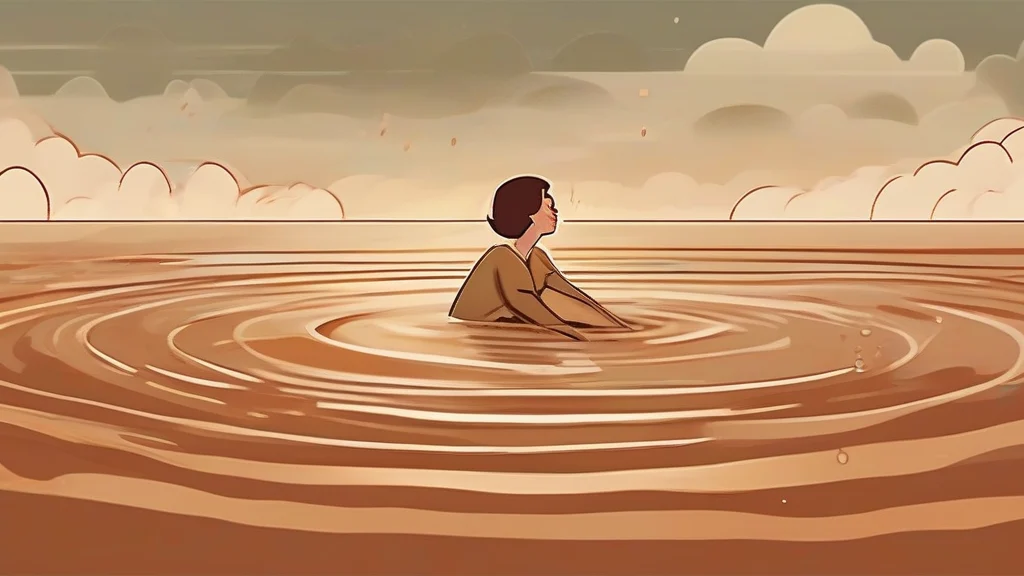
What does plopping mean?
Plopping describes a short, hollow sound associated with a small object falling into water or producing a similar noise. In its most literal use, it describes a raindrop, pebble, or other object dropping into a pool, puddle, or cup: the impact creates a compact, rounded sound rather than a broad splash. The verb can also mean to fall or settle into place with a plop, as when someone “plops down” on a chair or sofa. This extension carries a slightly playful or informal quality and often suggests an abrupt, heavy landing. Plopping is particularly effective in descriptions of rain striking water or a hard surface. Because it imitates the sound it names, the word is vivid and immediately understandable, making it more expressive than the general term “drop,” though less forceful than “splash.”
To fall or drop into liquid with a short, hollow sound, or to make such a sound.
"The rain plopped loudly against the pond."
Often used with small objects and brief impacts.
Making a short, hollow sound characteristic of something dropping into liquid.
"We heard a plopping sound behind the shed."
This attributive use is less common than the verb.
The short, hollow sound made by something dropping into liquid.
"With a loud plop, the ball disappeared beneath the surface."
Used mainly for the sound itself.
Plopping is the sound language gives to a small, sudden impact with liquid—a word that is almost as expressive as the noise it names.
Reviewed by Deb Chak, Editor. AI-assisted content curated by RJS Tech Solutions LLP.
Where does plopping come from?
The word belongs to an imitative family based on “plop,” which was coined to represent a short, hollow sound like that made by an object entering liquid. The present-participle form “plopping” was formed by adding the standard suffix “-ing” to that verb. Its sound-based origin makes the word especially natural in descriptions of drops, splashes, and other sudden liquid impacts.
Related word forms
How plopping is actually used
The sound of a body entering liquid is especially natural with small objects and brief impacts. The verb can also be used humorously for sitting down heavily or making a sound like something dropping into water.