
What does ploughboy mean?
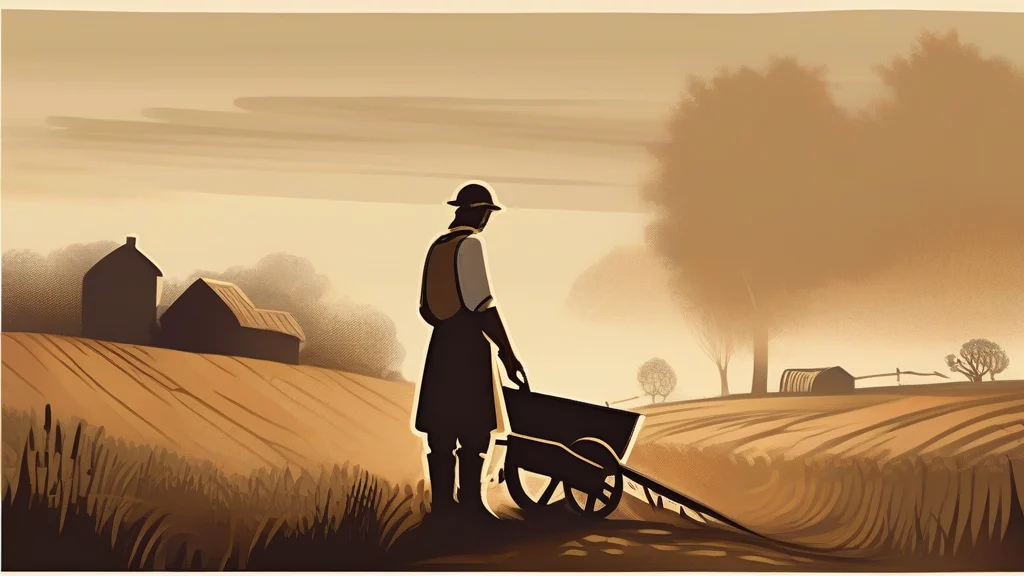
A ploughboy was a boy or young man whose work was to guide a plough and its plough team across a field. The role required practical knowledge of animals, soil, and the handling of agricultural equipment, and it was especially associated with the rural labour of nineteenth-century Britain and Ireland. In modern usage, the word survives chiefly in historical or literary contexts. It may also refer more broadly to a rustic or country labourer, often with nostalgic or poetic associations. The expression evokes a vanished pattern of rural life in which children participated directly in farm work. Although the traditional occupation is uncommon today, ploughboy remains recognizable because it names a specific and once-familiar agricultural worker rather than a general farmhand. In American English, the corresponding spelling is plowboy, though the term itself is uncommon in contemporary American usage.
nounA boy or young man employed to guide a plough or plough team. By extension, the term has been used poetically for a rustic or country labourer.
- A boy employed to guide a plough or plough team.
- A rustic or country labourer, especially in poetic or nostalgic usage.
"The ploughboy whistled as he guided the team across the field."
"A young ploughboy led the horses along the furrow."
"The poem portrays the ploughboy as a symbol of rural endurance."
The regular plural is used when referring to several boys employed in ploughing or to several people characterized as rustics.
"Several ploughboys worked alongside the older farm labourers."
Once a familiar figure in rural life, the ploughboy now survives mainly in British literature and the language of the countryside.
Reviewed by Deb Chak, Editor. AI-assisted content curated by RJS Tech Solutions LLP.
Where does ploughboy come from?
Ploughboy is an English compound formed from plough and boy, both of which were established in Middle English. It originally referred literally to a boy employed in ploughing. The word later acquired a broader literary sense for a rustic or country labourer, and it is now chiefly historical or poetic.
How ploughboy is actually used
Ploughboy is chiefly British and now sounds historical, dialectal, or literary. The American spelling is usually plowboy. Its broader use for a rustic carries an affectionate, nostalgic, or idealized quality in older writing.
Easily confused with ploughboy
A ploughboy is specifically a boy or young man guiding a plough, whereas a ploughman is an adult worker whose broader duties may include ploughing and other agricultural tasks.