
What does poking mean?
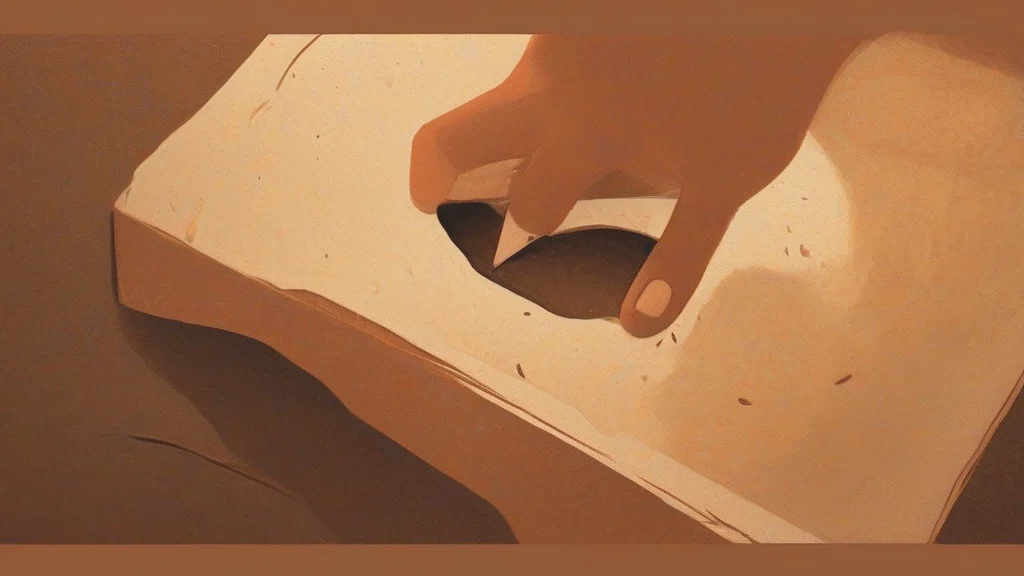
“Poking” is the present participle of the English verb “poke” and is used for the action of prodding or jabbing something with a finger, stick, or other pointed object. It can describe both deliberate actions, such as testing the consistency of dough, and repeated or idle movements, such as poking at a device or a person. In informal contexts, “poking” also means to interfere, investigate, or meddle: “Stop poking around” asks someone to stop searching or prying. The expression “poking fun at” is a more playful development, meaning to tease or make humorous sport of someone. As a noun, “poking” can refer to an act of prodding or to unwanted interference, although this use is less common than the verbal form. The word is useful because it combines a concrete physical action with a figurative sense of curiosity that can be either playful or unwelcome.
To prod, jab, or push with a finger or pointed object; also, to interfere or meddle.
"Don't keep poking the patient while the nurse is working."
The verb is commonly used in the present-participle form, especially with “at,” and can describe light, repetitive, or tentative actions.
An act or instance of prodding, jabbing, or interfering.
"The constant poking from the child made it difficult to read."
This noun use is less common than the verbal form and is usually contextual rather than a specialized technical term.
From a gentle prod to an unwanted meddle, “poking” captures the difference between curiosity that can be playful and interference that is not.
Reviewed by Deb Chak, Editor. AI-assisted content curated by RJS Tech Solutions LLP.
Where does poking come from?
The English verb “poke” is recorded from the Middle English period and belongs to Germanic vocabulary. Its older development is not entirely certain, but the basic sense was to prod, thrust, or jab something. The present participle “poking” developed from that verb and later acquired figurative meanings involving curiosity, interference, and teasing. The related forms “poker” and “pokeful” reflect the same productive sense of prodding or poking.
Related word forms
How poking is actually used
As a present participle, “poking” can show an action in progress, as in “He was poking at the screen,” or an ongoing activity, as in “stop poking around.” The verb is often informal when it means to interfere, and “poking at” can suggest repeated, tentative, or ineffectual attempts to deal with something. In the expression “poking fun at,” the word has a playful, teasing connotation.
Easily confused with poking
Poking generally suggests a light or repeated prod with a finger or pointed object, whereas probing suggests a more deliberate search or investigation.