
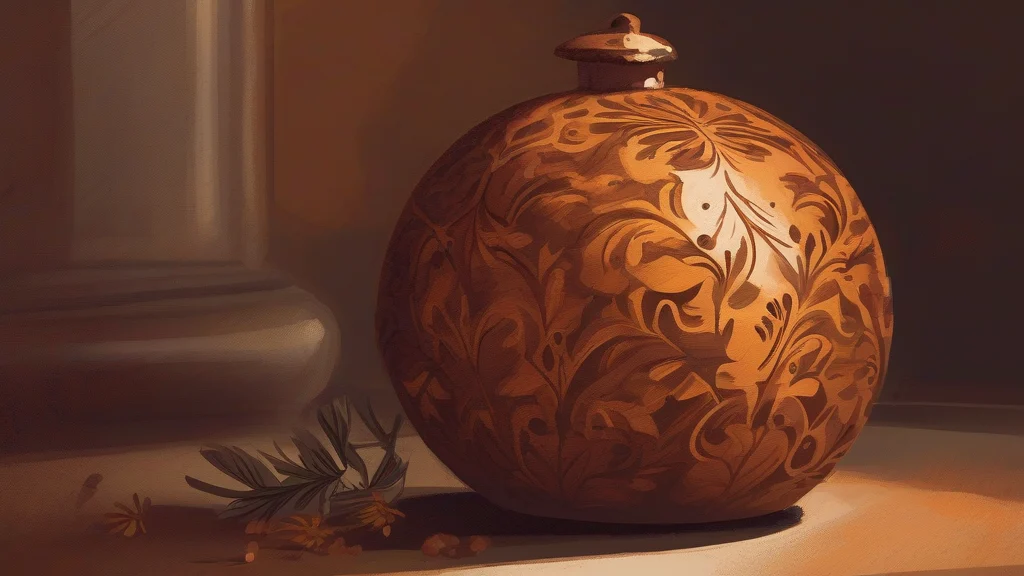
What does pomander mean?
A pomander is a fragrant object traditionally made from spices or perfume, usually formed into a ball and stored in a small decorative container. Pomanders were used to scent cupboards, bedrooms, linens, and clothing, and examples were sometimes made from silver, enamel, or other ornamental materials. A second traditional form was the pomander orange: a citrus fruit punctured with cloves and allowed to dry, producing a warm, spicy fragrance when placed in a room. The word also survives in modern terms such as pomander beads, which are pierced aromatic beads worn or displayed. Although no longer a common everyday term, a pomander is a vivid example of how people have combined fragrance, craft, and decorative design. Its unusual history connects citrus fruit, cloves, perfume, and the once prized substance ambergris.
nounA pomander is a fragrant preparation traditionally made with spices or perfume, often formed into a ball and kept in a decorative container. The name also denotes such a container and, historically, a citrus fruit prepared with cloves to scent a room or clothing.
- A fragrant ball or solid preparation made from spices, perfume, or a mixture of aromatic ingredients.
- A small decorative container made to hold such a fragrant preparation.
- An orange or similar citrus fruit studded with cloves and dried so that it releases fragrance.
"She placed a fragrant pomander in the linen chest to keep the clothes fresh."
"A silver pomander filled the hallway with the scent of cloves and rose."
"She tucked a pomander orange among the sheets of the guest room."
Used when referring to multiple fragrant preparations, containers, or clove-studded oranges.
"The collection includes pomanders made from silver and painted enamel."
The pomander orange was a fragrant social object: an orange studded with cloves that released a sweet, spicy perfume into the room.
Reviewed by Deb Chak, Editor. AI-assisted content curated by RJS Tech Solutions LLP.
Where does pomander come from?
The word entered Middle English through forms derived from medieval Latin pomum de ambre, literally an 'apple of ambergris,' referring to a fragrant fruit resembling an orange. Its development was influenced by Portuguese pomo de ambre, 'amber apple,' the source of the name pomander orange. The components ultimately relate to Latin pomum, meaning fruit or apple, and ambra, associated with amber or ambergris, although the word's later meaning largely reflects its use for scented spices and oranges.
Related word forms
How pomander is actually used
The word is chiefly historical and literary in modern English, though it remains common in descriptions of decorative objects, jewelry, and scented crafts. It is not normally used for a modern room freshener.
Easily confused with pomander
A pomade is a scented oil or wax preparation used on the hair or skin, whereas a pomander is a fragrant object, container, or clove-studded orange used to scent a space.