
What does portage mean?
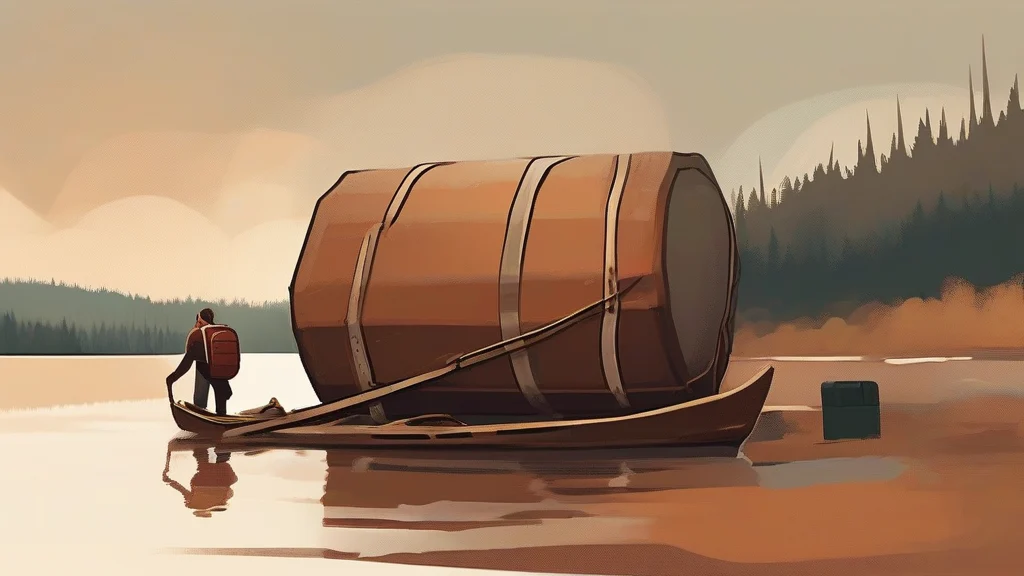
A portage is a journey, route, or act of carrying people, goods, or boats across land between navigable waters. The word is especially associated with Canada, the northern United States, and the history of fur trading and exploration, where river systems were often linked by difficult overland passages. To make a portage was to unload a canoe, carry the boat and supplies along a trail, and relaunch them in another waterway. In a verb form, “to portage” means to transport something across such a route. Although the expression can describe a practical method of travel, it often evokes arduous wilderness journeys and the ingenuity of travellers navigating connected rivers and lakes. Today, the term remains common in regional place names, historical writing, and descriptions of northern waterways.
The act of carrying people, goods, or boats overland between navigable waters; a route where this is done; or the transportation of goods or passengers from one water route to another.
"The route included a long portage between the lake and the river."
Especially common in Canadian and northern US English; often used in descriptions of travel, exploration, and the fur trade.
To carry or transport people, goods, or boats overland between navigable waters.
"They portaged the canoe and supplies across the narrow divide."
Less common than the noun and particularly associated with Canadian and northern US regional usage.
The plural refers to separate overland carrying journeys, routes, or passages between navigable waters.
"The travellers crossed several portages before reaching the coast."
A portage is where the wilderness forces travelers to leave the water and carry everything by foot.
Reviewed by Deb Chak, Editor. AI-assisted content curated by RJS Tech Solutions LLP.
Where does portage come from?
The word comes from French portage, a noun meaning the carrying or transport of goods, derived from porter, “to carry.” English usage dates back to the early modern period, particularly in the fur-trade and exploration history of North America. The French word ultimately derives from Latin portare, “to carry,” which also underlies related English words such as portable and porter.
Related word forms
How portage is actually used
The noun is common in Canadian and northern US geographical and historical contexts, especially in descriptions of rivers, fur trade routes, and wilderness travel. The verb is less common and is especially associated with regional usage.
Easily confused with portage
A port is a coastal or riverside place where ships load and unload cargo, whereas a portage is the overland carrying of goods or boats between navigable waters.