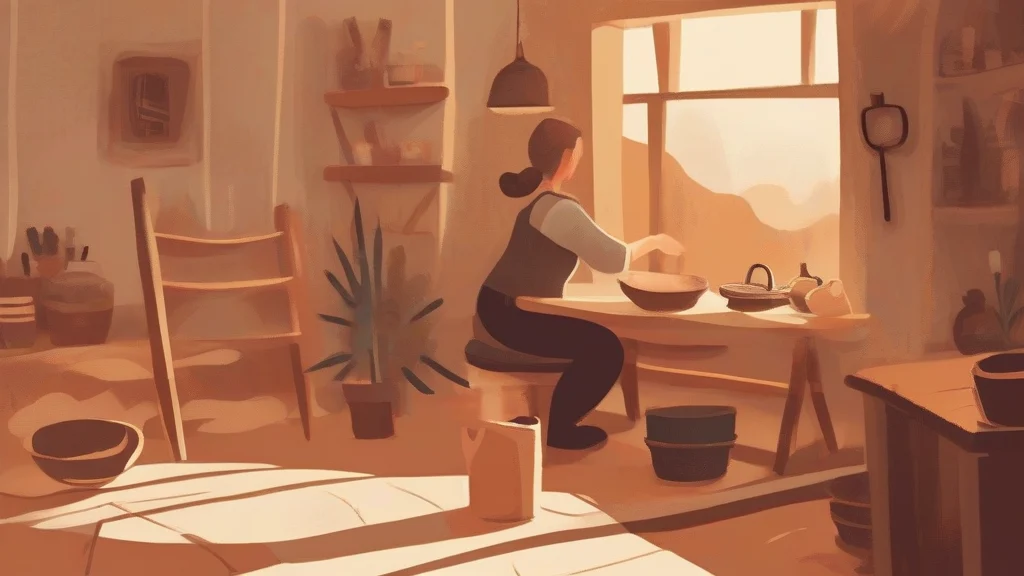
What does pottering mean?
Pottering refers to engaging in an activity, often a hobby or task, in a leisurely and aimless manner. This verb is commonly used in British English to describe someone who is doing something in a slow and casual way, often without a clear goal or sense of urgency. For example, someone might spend the afternoon pottering around the garden, pruning flowers and weeding, or pottering about the house, doing odd jobs. While pottering can imply a lack of focus or productivity, it can also suggest a relaxed and enjoyable approach to an activity. The verb is often used in informal contexts and can be used to describe a range of activities, from hobbies like painting or gardening to everyday tasks like cleaning or cooking.
verbEngaging in an activity, especially a hobby or a task, in a leisurely and aimless manner. Often used to describe someone who is doing something in a slow and casual way.
- Engaging in a leisurely activity
- Doing something in a slow and casual manner
"She spent the afternoon pottering around the garden, pruning flowers and weeding."
"He spent the day pottering about the house, doing odd jobs."
"The artist was pottering with paint, trying to get the right shade."
Reviewed by Deb Chak, Editor. AI-assisted content curated by RJS Tech Solutions LLP.
Etymology of pottering
The verb pottering is derived from the noun potter, which refers to a person who makes pottery. The verb has been used in English since the 19th century to describe someone who works with pottery or ceramics in a casual or amateur way. Over time, the meaning of the verb has expanded to include any activity that is done in a leisurely and aimless manner.
How pottering is actually used
Often used in British English to describe a relaxed and casual approach to an activity. Can have a slightly negative connotation, implying a lack of focus or productivity.