
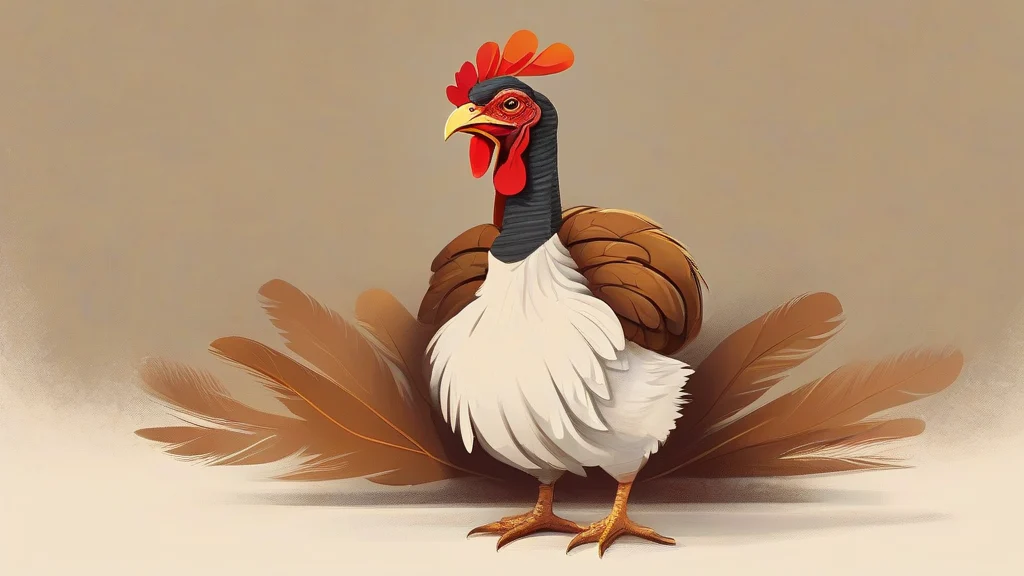
What does poult mean?
A poult is a young fowl, particularly a young turkey. Unlike the everyday word chick, which can refer to any newly hatched bird, poult is specialized and relatively uncommon; it occurs especially in older writing, farming or breeding contexts, and descriptions of turkeys. The term is still useful when precision matters, because it can distinguish a young turkey from a pullet, which is specifically a young hen. A poult may also be used generically in historical contexts for a young domestic bird. Although the word sounds unfamiliar, it belongs to the same broad vocabulary family as pullet and poultry, reflecting the long English and French history of terms connected with young birds and domestic fowl.
nounA young fowl, especially a young turkey. The word is now rare and is mainly found in literary, historical, or specialist contexts.
- A young fowl, especially a young turkey.
"The farmer cared for the poults until they were old enough to range freely."
"A turkey poult wandered into the garden."
"The account describes the care of poults in the early breeding season."
The plural is used when referring to several young fowl.
"The young poults were kept in a warm enclosure."
A poult is a young fowl with an old-fashioned name, best known today as a young turkey.
Reviewed by Deb Chak, Editor. AI-assisted content curated by RJS Tech Solutions LLP.
Where does poult come from?
Poult entered English through Old French, where it referred to a young fowl. Its ultimate connection is with Latin pullus, meaning a young animal, and the same broad root is reflected in related English words such as pullet and poultry.
How poult is actually used
This is an uncommon word, chiefly literary, historical, or specialist. In modern use, it is especially associated with a young turkey rather than a young chicken.
Easily confused with poult
A pullet is a young hen, while a poult is more specifically a young fowl, often a turkey.