
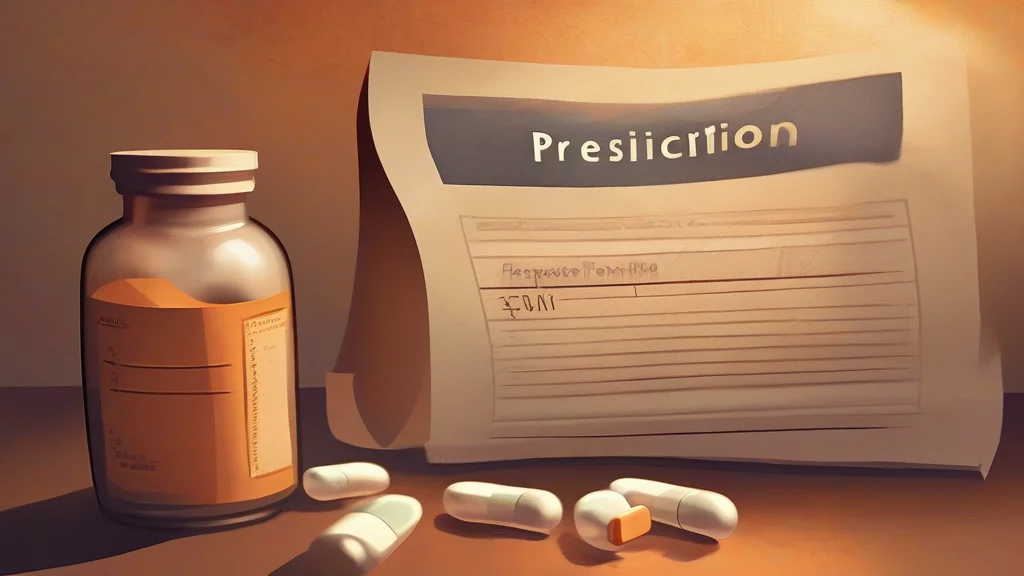
What does prescription mean?
A prescription most commonly means a medicine or medical preparation that a qualified healthcare professional has authorized for a particular patient. It may refer to the medicine itself, the written authorization, or the act of issuing that authorization. The word also has formal uses in law, institutions, and established custom: a prescription can be an authoritative rule or a prescribed way of doing something. In medicine, prescriptions indicate that a product should be supplied or used under professional supervision, although some jurisdictions distinguish between medicines available only with authorization and those available without it. The word often carries a clinical and official tone, suggesting permission, expertise, and deliberate procedure. Its broader metaphorical use—describing a rule or method regarded as settled or authoritative—reflects the same combination of written direction and authorized action.
nounA prescription is a medicine or medical preparation authorized for a particular patient by a qualified healthcare professional. More broadly, it means an official recommendation, direction, or legally recognized rule governing an action or practice.
- A medicine or medical preparation authorized for a particular patient by a qualified healthcare professional.
- The act of prescribing medicine or issuing an official direction, recommendation, or procedure.
- A legally recognized rule, established practice, or prescribed formula governing conduct or the making of something.
"The doctor wrote a prescription for antibiotics to treat the infection."
"She filled the prescription at the pharmacy before dinner."
"The organization's constitution contains a prescription for resolving internal disputes."
The plural is used for individual medicines, written authorizations, and separate official rules or recommendations.
"The pharmacy filled three prescriptions before closing."
Prescription literally means “a writing before,” a reminder that the word began as an instruction rather than a medicine itself.
Reviewed by Deb Chak, Editor. AI-assisted content curated by RJS Tech Solutions LLP.
Where does prescription come from?
The word entered Middle English from Old French prescription, a noun derived from Latin praescriptio, meaning “a writing before” or “direction.” That Latin form came from praescribere, literally “to write before,” built from prae- and scribere, “to write.” The general sense of an official direction developed alongside specialized medical and legal uses, while related English forms include prescribe and prescriptive.
How prescription is actually used
In medical contexts, the word is standard and usually countable when referring to an individual authorization or document. The informal shortening “script” is common in North American English, while “prescription” remains the usual term in formal and British usage. In legal, historical, and institutional contexts, it can refer to an authoritative rule or established procedure rather than to medicine.
Easily confused with prescription
A prescription authorizes or directs something, whereas a proscription prohibits or forbids it.