
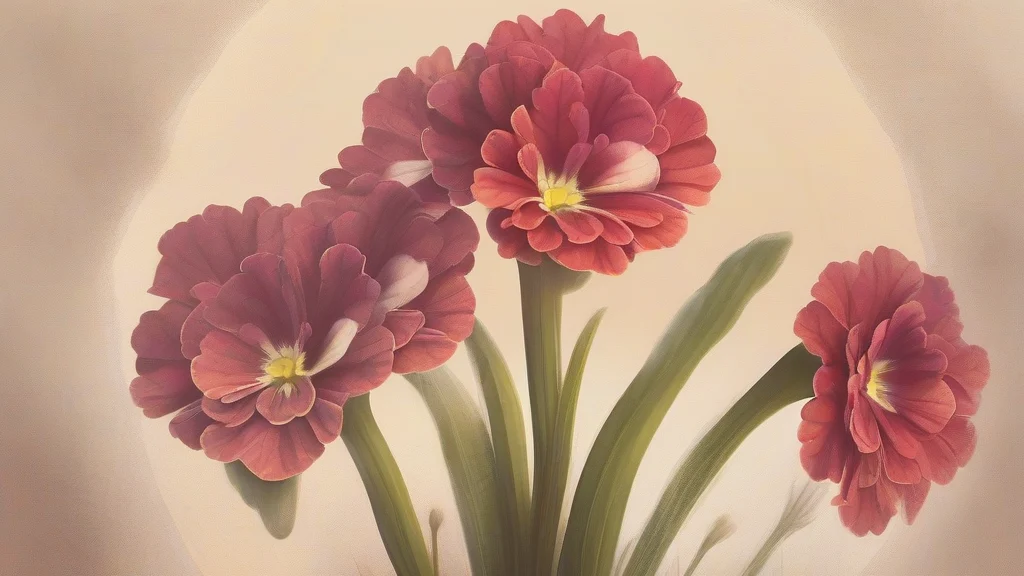
What does primula mean?
Primula denotes a member of a large genus of perennial flowering plants in the primrose family, Primulaceae. Its members are usually low-growing herbs with leaves arranged in a basal rosette and colorful flowers carried on individual stalks, though their form varies considerably across the genus. Garden primulas are valued for their vivid colors, long flowering period, and tolerance of cool conditions. The word is especially common in botanical, horticultural, and alpine-gardening contexts, while most speakers use the more familiar term “primrose” in general conversation. Primulas include familiar plants such as cowslips, polyanthuses, and certain auriculas. The name comes from Latin and is associated with the genus’s reputation for flowering early, giving it a literal connection to being the “first” or earliest bloom of the year.
nounA Primula is any member of a large genus of herbaceous perennial flowering plants, commonly called primroses, that typically have basal rosettes of leaves and flowers borne on slender stalks. The genus belongs to the family Primulaceae and includes familiar garden species such as the common primrose and cowslip.
- Any flowering plant belonging to the botanical genus Primula.
- A plant of the Primula genus cultivated as a garden ornament.
"The botanist identified the plant as a rare primula native to the alpine meadows."
"A cluster of yellow primulas brightened the shady border beneath the trees."
"The nursery specializes in alpine primulas that thrive in cool, damp conditions."
The standard plural is used when referring to multiple plants, examples, or species of the genus.
"The exhibition displayed primulas from several regions of the Northern Hemisphere."
The name Primula means “little first,” an apt tribute to plants celebrated for flowering early in the season.
Reviewed by Deb Chak, Editor. AI-assisted content curated by RJS Tech Solutions LLP.
Where does primula come from?
Primula comes from the Latin primula, a diminutive of primus meaning “first,” traditionally explained as “little first” because these plants flower early in the year. The word was adopted into scientific usage in the genus name Primula. It is related to English words including “prime,” “primary,” and “primitive,” all of which continue the Latin sense of first or earliest.
Related word forms
How primula is actually used
Primula is primarily a botanical or horticultural term. In everyday English, “primrose” is much more common, although the two words overlap when primula is used to refer to the entire genus.
Easily confused with primula
Primula is the botanical genus containing primroses, while primrose commonly refers both to the genus as a whole and to a particular well-known species within it.