
What does propane mean?
Propane is a colorless, flammable gaseous alkane with the chemical formula C3H8. It occurs naturally in petroleum and natural gas and is separated industrially for use as fuel. Because propane liquefies under relatively modest pressure, it can be stored and transported in cylinders, tanks, or bulk containers. These properties have made it important for cooking, space heating, refrigeration, industrial processes, and engines, especially in places without access to mains gas or electricity. In domestic contexts, the word commonly refers to the fuel sold for portable stoves, heaters, and grills. Although propane itself is odorless, commercial supplies are treated with an odorant to make leaks noticeable. The word is also used in chemistry as part of a wider family of hydrocarbon names, including propene, propanol, and propanone. Its combination of portability, energy density, and clean combustion explains why it remains a familiar substance in both homes and industrial settings.
nounPropane is a colorless, flammable gaseous alkane with the formula C3H8, widely used as a fuel for heating, cooking, and powering engines. It is easily liquefied under pressure and is commonly sold as a gas or in cylinders for outdoor and off-grid use.
- The chemical compound propane, a three-carbon gaseous alkane used as a fuel and refrigerant.
"They heated the cabin with a small propane stove during the winter."
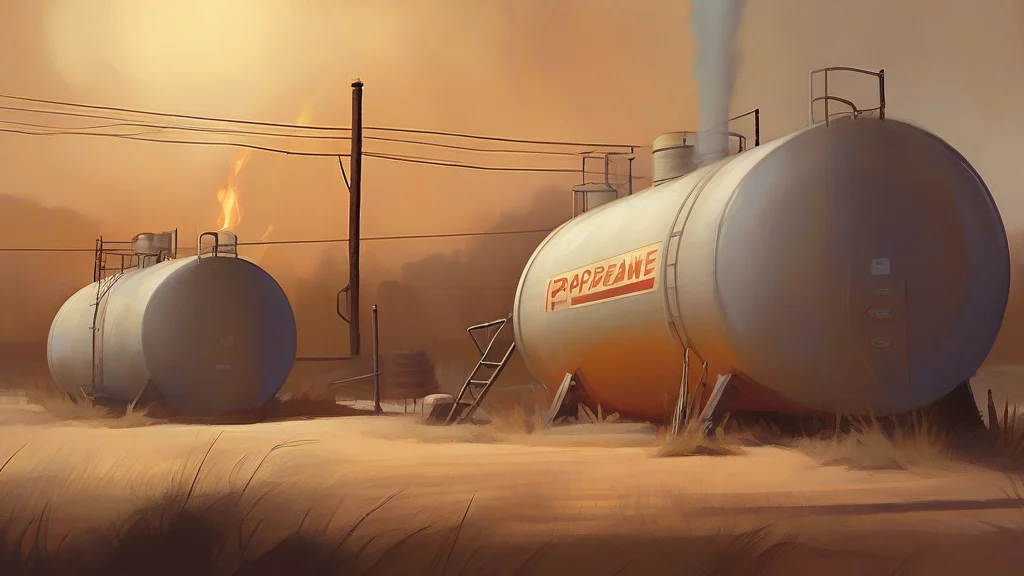
"The restaurant's grills are connected to large propane tanks outside the building."
"Propane is the third member of the alkane series, following methane and ethane."
Usually an uncountable mass noun, like water or gas; plural forms are uncommon outside specialized technical writing.
"The shop delivered two cylinders of propane."
Propane is both a gas and a fuel: squeeze it under enough pressure and it becomes the liquid that powers many camping stoves.
Reviewed by Deb Chak, Editor. AI-assisted content curated by RJS Tech Solutions LLP.
Where does propane come from?
Propane's name was formed within the systematic naming conventions developed for hydrocarbons during the nineteenth century. The element prop- indicates a three-carbon chain, while the suffix -ane denotes a saturated hydrocarbon whose carbon atoms are joined by single bonds. Related chemical names such as propene, propanol, propanone, and propionic acid share this prop- root and reflect the same systematic chemical vocabulary.
How propane is actually used
Propane is neutral in register and is common in both technical chemistry and everyday household and industrial contexts. The pure gas is odorless, but commercial propane is deliberately given an odor so leaks can be detected.
Easily confused with propane
Both are colorless hydrocarbon gases used as fuels, but butane has four carbon atoms rather than propane's three and is often used in lighter-duty portable and camping equipment.