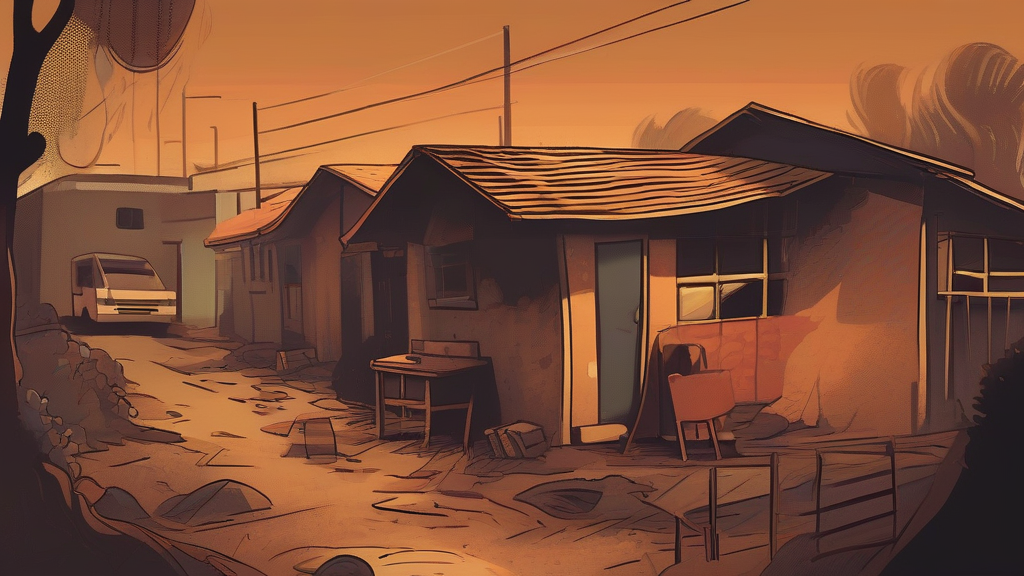
What does propertyless mean?
The term propertyless refers to individuals or groups who lack ownership of property, assets, or possessions, often implying a state of poverty or economic vulnerability. This adjective is used to highlight the absence of material goods, particularly land or goods, and can be applied in various contexts, including social, economic, and historical discussions. Propertyless people may face significant challenges, such as limited access to resources, services, or social mobility. The concept of propertylessness is essential in understanding social inequality, economic systems, and the distribution of wealth. By acknowledging the experiences of propertyless individuals and communities, we can better address issues of poverty, inequality, and social justice.
adjectiveHaving no property or possessions, especially land or goods. Often used to describe people who are impoverished or without assets.
- Having no property or possessions
- Impoverished or without assets
"The propertyless peasants were forced to live on the outskirts of the village."
"The propertyless family struggled to make ends meet."
"The government's policies aimed to help the propertyless and vulnerable members of society."
Reviewed by Deb Chak, Editor. AI-assisted content curated by RJS Tech Solutions LLP.
Etymology of propertyless
The word propertyless originated from the combination of 'property' and the suffix '-less', which indicates a lack or absence. The term 'property' comes from the Old French 'propriete', derived from the Latin 'proprietas', meaning 'ownership' or 'quality of being one's own'. The suffix '-less' is from the Old English '-lēs', which is also seen in other English words such as 'helpless' and 'homeless'.
How propertyless is actually used
Often used in formal or literary contexts to describe social or economic conditions. Can be used to emphasize the lack of material possessions or assets.