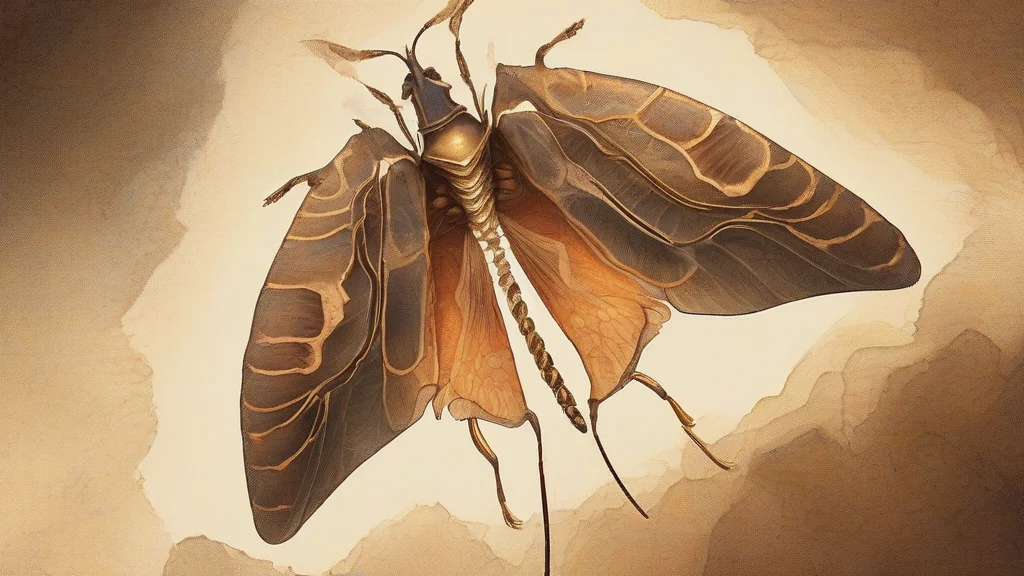
What does prosternum mean?
The prosternum is a distinct part of the thorax in insects, typically forming a plate or sclerite. It is the ventral (front) part of the thorax and is often a characteristic feature of an insect's anatomy. The prosternum is usually fused with other parts of the thorax, such as the mesosternum, and may be less visible in some insects. In entomology, the prosternum is an important feature for identifying and classifying insects. While it may be less familiar to non-specialists, the prosternum is a key component of an insect's thorax and plays a significant role in its overall structure and function. The study of the prosternum and other thoracic features has contributed significantly to our understanding of insect anatomy and evolution.
nounThe prosternum is the ventral (front) part of the thorax in insects, typically forming a distinct plate or sclerite.
- The prosternum is the ventral part of the thorax in insects.
"The prosternum of the beetle was a distinctive feature of its anatomy."
"The prosternum of the beetle was a distinctive feature of its anatomy."
"In some insects, the prosternum is fused with the mesosternum."
The plural form prosterna is used when referring to multiple prosterna in a collective sense.
"The prosterna of the beetle were a distinctive feature of its anatomy."
Reviewed by Deb Chak, Editor. AI-assisted content curated by RJS Tech Solutions LLP.
Etymology of prosternum
The term prosternum is derived from the Greek words 'pro' meaning 'before' and 'sternon' meaning 'chest' or 'breast'. It is related to the Latin word 'sternum' meaning 'chest' or 'breast', which is also the source of the English word 'sternum'. The term prosternum was first used in the 19th century to describe the ventral part of the thorax in insects.
How prosternum is actually used
The term prosternum is primarily used in entomology and may be less familiar to non-specialists.