
What does prow mean?
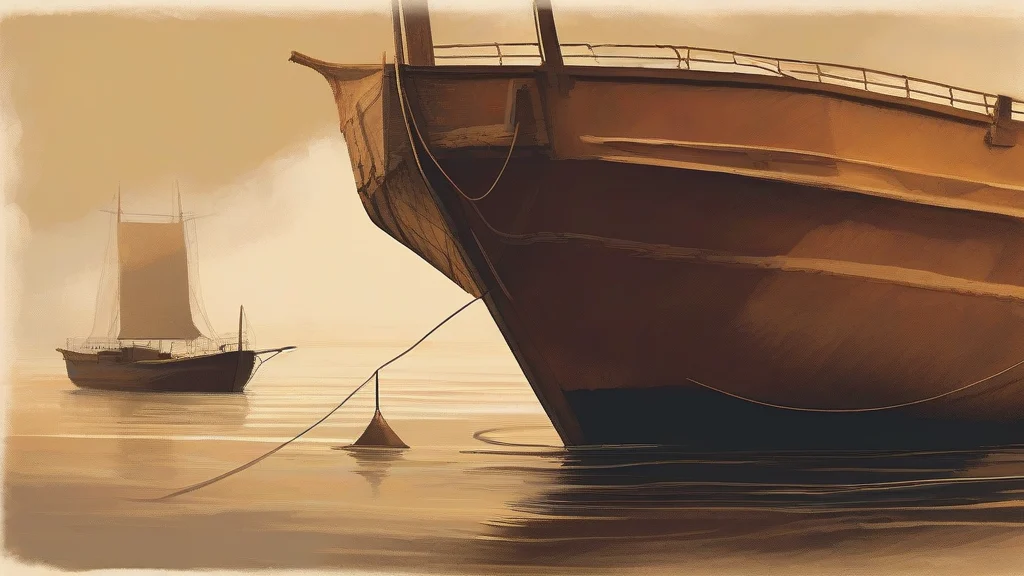
A prow is the forward part of a ship, the place from which its bow points ahead. In nautical contexts, it may bear a figurehead or other identifying ornament and can be described as rising, sharp, or battered according to the vessel and its condition. The same word also functions as a verb: to prow means to move steadily through a place, often with a sense of searching, purpose, or stealth. Writers use it for a ship advancing through water, a person moving cautiously through darkness or snow, or an animal hunting across open ground. Although the noun is especially associated with ships and boats, the verb is broader and more literary than purely nautical terminology. Together, the two senses connect the pointed front of a vessel with purposeful forward movement. Prow is also easy to confuse with prowl, but a prowl describes stealthy movement, not the front of a boat.
The forwardmost part of a ship or other vessel, including the bow and the area immediately behind it.
"The name of the vessel was painted in gold across its prow."
Chiefly a nautical term; in figurative use, it can mean the leading or foremost part of a group.
To move steadily through or across a place, especially water, snow, darkness, or a populated area.
"The ferry prowled through the heavy morning fog."
The verb often conveys purposeful or stealthy movement and is frequently used in figurative descriptions.
The plural is used when referring to the front sections of multiple vessels.
"The stone heads of saints adorned the church model and its two prows."
A ship's prow once carried a projecting ram used in naval combat; on later vessels, the form became a graceful beak pointing into the wind.
Reviewed by Deb Chak, Editor. AI-assisted content curated by RJS Tech Solutions LLP.
Where does prow come from?
The noun entered Middle English through Old French forms meaning the bow of a ship and ultimately relates to Latin prora, a maritime term for a ship's bow borrowed from Greek prōra, meaning prow or bow. The nautical sense is therefore ancient in origin. The verb developed in English for deliberate or stealthy movement, especially through water, and its modern figurative uses extend that older nautical idea.
How prow is actually used
The noun is chiefly nautical. The verb is commonly used in vivid descriptions of deliberate movement through a medium or area and often suggests purposefulness or stealth.
Easily confused with prow
A prow is the front of a vessel, whereas a prowl is a stealthy search for prey or something to steal.
A prow is the forward part of a ship, while to pry means to look closely or force something open.