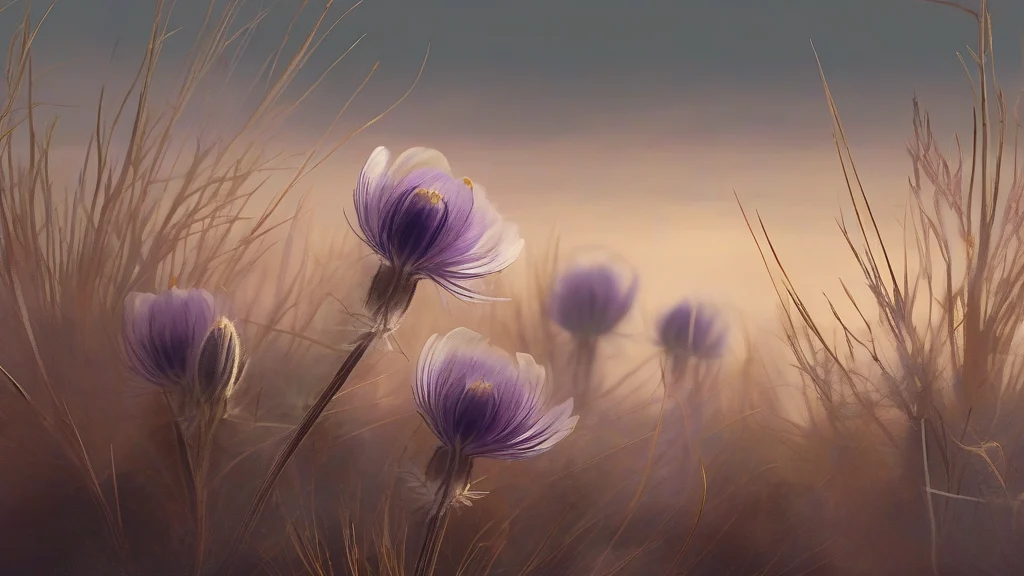
What does pulsatilla mean?
Pulsatilla is a genus of flowering plants that are native to the Northern Hemisphere. They are known for their delicate, bell-shaped flowers and fern-like foliage. The plants are often used in formal or poetic contexts to describe a delicate or fleeting beauty. In botanical and horticultural contexts, pulsatilla refers to the specific genus of plants. The word is often associated with hope and renewal, and is used in a variety of contexts to describe the beauty and fragility of life. Pulsatilla is a useful word for describing the delicate and ephemeral nature of certain plants and phenomena. It is a word that evokes a sense of wonder and appreciation for the beauty of the natural world.
A genus of flowering plants
"The gardener carefully planted the pulsatilla in the rocky crevice, where it would bloom beautifully in the spring."
Pulsatilla is often used in formal or poetic contexts to describe a delicate or fleeting beauty.
A type of pasque flower
"The artist used the pulsatilla as a symbol of hope and renewal in her painting."
The plural form pulsatillas is used to refer to multiple plants of the genus.
"The garden was filled with dozens of pulsatillas, their delicate flowers swaying gently in the breeze."
Reviewed by Deb Chak, Editor. AI-assisted content curated by RJS Tech Solutions LLP.
Etymology of pulsatilla
The word pulsatilla comes from the Latin word 'pulsare', meaning 'to strike or beat', and the diminutive suffix '-illa'. This refers to the plant's habit of swaying gently in the breeze. The word has been used in English since the 18th century to describe the specific genus of plants.
How pulsatilla is actually used
Pulsatilla is often used in formal or poetic contexts to describe a delicate or fleeting beauty. It is also used in botanical and horticultural contexts to refer to the specific genus of plants.