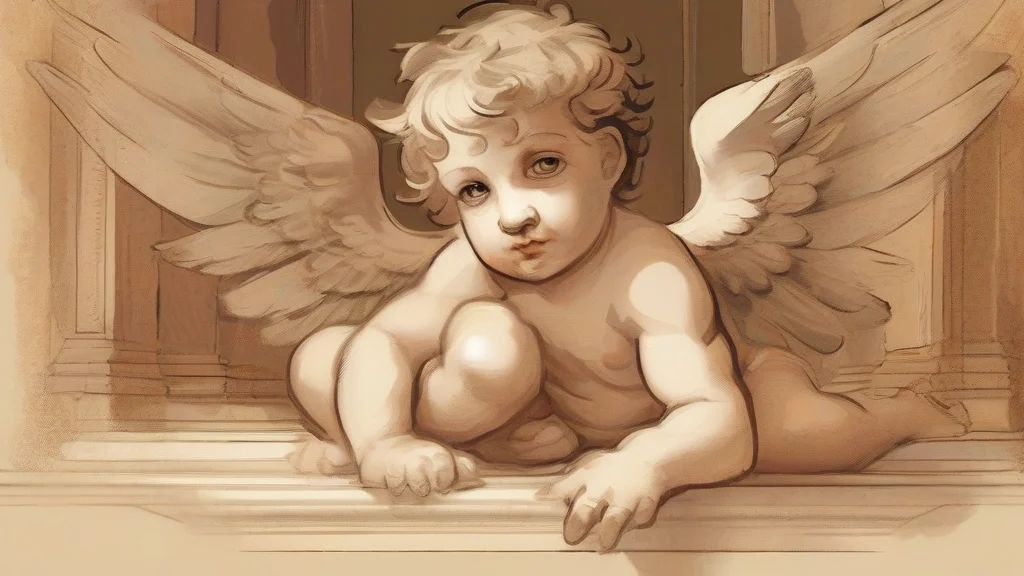
What does putti mean?
Putti are small, winged figures commonly depicted in Renaissance art and architecture. They are often shown as playful, cherubic children, sometimes with wings, and are typically used to symbolize innocence, love, or divine presence. These figures can be found in various forms of art, including paintings, sculptures, and architectural decorations. The term 'putti' is plural, with the singular being 'putto'. In art historical contexts, putti are associated with the works of artists such as Michelangelo and Raphael, who frequently incorporated them into their compositions. The use of putti in art and architecture continues to be appreciated for its beauty and symbolic significance.
nounPutti refers to small, usually winged, cherubic figures often depicted in art, particularly in Renaissance art and architecture. They are typically shown as playful, mischievous, or affectionate.
- A small, winged figure depicted in art, often symbolizing innocence or love.
- In architecture, a decorative carving or sculpture of such a figure.
"The ornate ceiling was adorned with intricate carvings of putti playing musical instruments."
"The painting featured a group of putti frolicking in a garden."
"The church's facade was decorated with stone putti holding garlands of flowers."
The term 'putti' is often used as a plural noun, referring to multiple figures.
"The ceiling was adorned with intricate carvings of putti playing musical instruments."
Reviewed by Deb Chak, Editor. AI-assisted content curated by RJS Tech Solutions LLP.
Etymology of putti
The term 'putti' originates from the Italian word 'putto', meaning 'boy' or 'child'. This term has been used in the context of art and architecture since the Renaissance period to describe small, winged figures often depicted as children. The etymology of 'putto' is linked to the Latin word 'putus', also meaning 'boy'. The use of putti in art is believed to have been influenced by classical Greek and Roman art, where similar figures were depicted.
How putti is actually used
The term 'putti' is often used in art historical contexts and may be less commonly encountered in everyday conversation. It is typically used as a plural noun, though the singular 'putto' may be used in certain contexts.